
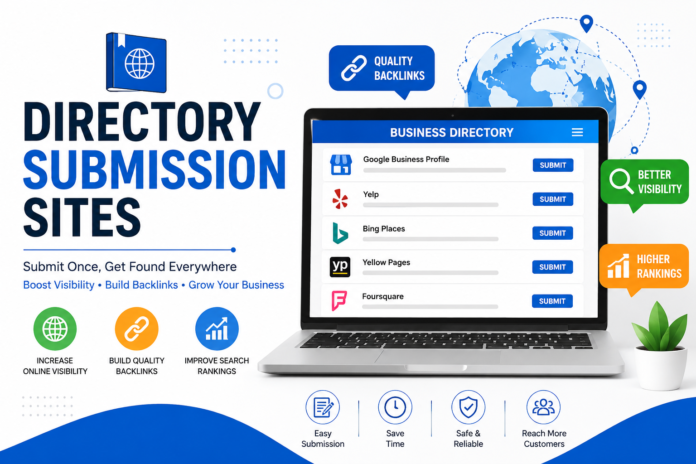

Directory submission sites have been part of SEO for many years, and they are still discussed whenever marketers talk about backlinks, website visibility, and off-page SEO. While the old approach of submitting a website to hundreds of random directories is no longer a smart strategy, carefully selected directories can still help a website build a stronger online presence.
The key is quality. Search engines have become much better at identifying low-quality, spammy, and manipulative link-building practices. Because of this, website owners should focus less on the number of directory links they can create and more on whether a directory is relevant, trustworthy, useful to visitors, and genuinely connected to their industry.
In this guide, we will explain what directory submission sites are, how directory submission works, what makes a directory valuable, common mistakes to avoid, and how you can use directory submissions as part of a broader SEO strategy.
What Are Directory Submission Sites?
Directory submission sites are online platforms that organize websites, businesses, services, or resources into categories. Website owners can submit their websites to relevant categories so people can discover them through the directory. Depending on the platform, a submission may include the website name, URL, business description, category, location, and other basic information.
Think of an online directory as a digital version of a business directory. Instead of searching through printed pages, users can browse categories or search for specific services online. Some directories are general and cover many industries, while others focus on a particular niche, profession, location, or type of business.
From an SEO perspective, a directory listing can sometimes provide a backlink and an additional way for people to find your website. However, not every directory link has the same value. A reputable, relevant directory can be useful, while a directory created mainly to publish thousands of low-quality links may provide little or no SEO benefit.
How Does Directory Submission Work?
The basic process is usually simple. First, you find a directory that is relevant to your website or business. You then choose the appropriate category and provide accurate information about your website. Some directories review submissions manually, while others may approve listings automatically or use a combination of automated and human review.
Before submitting a website, it is important to read the directory’s guidelines. Some platforms require a specific title format, business description, category, location, or verification process. Following these rules can improve the chance of your listing being accepted.
Once the listing is published, it may appear as a profile or business entry within the directory. Depending on the directory, the listing might contain your website URL, contact details, business information, social profiles, or a short description. The real value comes from being listed in a place that users actually trust and use.
Why Are Directory Submission Sites Important for SEO?
One potential benefit of directory submissions is that they can help businesses establish a broader online presence. When your website appears on relevant and trustworthy platforms, users have another way to discover your brand. This can be particularly useful for local businesses and niche companies.
Directory listings can also support local SEO when they contain accurate business information. Consistent details such as your business name, address, phone number, website, and category can make it easier for customers to identify your business across the web. For local businesses, relevant directories can therefore be part of a wider local search strategy.
Another benefit is referral traffic. A good directory is not simply a place where links are stored. It can send real visitors to your website. If users actively search the directory for services or businesses in your industry, a well-optimized listing may generate clicks, inquiries, and customers.
Are Directory Submission Backlinks Still Useful?
This is one of the most common questions about directory submission sites. The short answer is that quality and relevance matter much more than quantity.
Creating hundreds of directory links simply because a website accepts submissions is not a strong modern SEO strategy. Search engines evaluate links in context, and low-quality or manipulative link-building can fail to provide meaningful value.
A relevant listing on a respected industry or local directory can make more sense than dozens of unrelated directories. For example, a local restaurant may benefit from being listed on legitimate food, tourism, and local business platforms. A software company, on the other hand, may look for technology-focused directories, software marketplaces, or business resources.
The goal should not be to collect as many backlinks as possible. Instead, think about whether the listing helps users, strengthens your brand’s presence, and naturally supports your overall SEO strategy.
Types of Directory Submission Sites
There are several different types of directories, and choosing the right type can make a big difference.
General Web Directories
General web directories list websites from many different industries and categories. They can be useful for discovering resources, but you should carefully evaluate their quality before submitting a website.
A good general directory should have clear categories, useful content, reasonable editorial standards, and a genuine purpose. Avoid directories that appear to publish every submitted website without any review.
Niche Directories
Niche directories focus on a specific industry or subject. These can be especially valuable because they are closely connected to a particular audience.
For example, a marketing agency could look for marketing or advertising directories, while a software business could search for technology-related platforms. Niche relevance makes a listing more meaningful because the people browsing the directory are more likely to be interested in the listed businesses.
Local Business Directories
Local directories are particularly useful for businesses that serve a specific geographic area. They can help customers discover businesses based on location, category, or service.
Restaurants, repair companies, agencies, clinics, retailers, contractors, and other local businesses can benefit from maintaining accurate profiles on legitimate local platforms. Consistency is important, so business information should be kept accurate and up to date.
Industry-Specific Directories
Industry-specific directories are created around professional fields such as education, construction, technology, finance, travel, real estate, or professional services.
These directories can be useful for branding and referral traffic because they place a business alongside other organizations in the same field. When selecting one, consider its audience, reputation, editorial standards, and usefulness.
How to Choose High-Quality Directory Submission Sites
Choosing the right directory is more important than finding a long list of submission websites. Start by checking whether the directory is relevant to your industry, audience, or location.
Next, look at the quality of the website. Does it have useful categories? Are the listings organized properly? Does the site appear to have real users? Is there useful content beyond a large collection of links? These questions can help you separate genuine directories from low-quality platforms.
You should also check whether the directory has clear submission guidelines and moderation policies. A platform that accepts every website instantly without review may deserve more caution than a directory that carefully manages its listings.
What Information Should You Include in a Directory Listing?
Your directory profile should provide accurate and useful information. Depending on the platform, this may include your business name, website URL, phone number, location, category, short description, services, and social media profiles.
Keep your business name consistent rather than creating slightly different versions for every directory. Consistency can make your online presence easier for users and search engines to understand.
Your description should also sound natural. Explain what your business does and who it serves instead of filling the text with repeated keywords. A clear description written for real people is generally more useful than a keyword-heavy paragraph.
Common Directory Submission Mistakes
One of the biggest mistakes is submitting a website to every directory you can find. More backlinks do not automatically mean better SEO. A large collection of poor-quality links can be less useful than a small number of relevant listings.
Another mistake is using the same keyword-stuffed business description everywhere. This can make your profiles look unnatural and reduce their usefulness to visitors. Write descriptions that accurately explain your business and vary the wording naturally when appropriate.
A third mistake is ignoring the directory’s actual audience. If nobody uses the directory and it has little relevance to your industry, there may be little reason to spend time creating a listing. Always ask yourself whether the directory provides genuine value beyond the possibility of obtaining a backlink.
Directory Submission vs. Other Link-Building Methods
Directory submission is only one part of off-page SEO. It should not replace stronger strategies such as earning editorial links, creating useful resources, digital PR, partnerships, industry mentions, and producing content that other websites genuinely want to reference.
For example, an original research article may naturally attract links from bloggers and journalists. A detailed industry guide may be referenced by other websites. A useful tool or calculator may also earn organic mentions.
Directory submissions can complement these methods, particularly for local businesses and niche websites. A balanced backlink profile generally makes more sense than relying heavily on one link-building technique.
How to Use Directory Submission Sites Safely
Start with a small number of high-quality, relevant directories instead of trying to submit your website everywhere. Research each platform before creating a listing.
Make sure your information is accurate and avoid deceptive descriptions. Do not create multiple listings for the same business simply to generate more links unless the directory specifically allows legitimate location or service listings.
Most importantly, treat directory submissions as a branding and discovery activity rather than a shortcut to higher rankings. When a directory provides real value to users, the listing has a purpose even beyond SEO.
Benefits of Directory Submission
Directory submissions can offer several potential benefits when used carefully:
- Online visibility: Your business can appear on additional websites.
- Referral traffic: Useful directories can send visitors to your website.
- Local SEO support: Local listings can help businesses maintain consistent information online.
- Brand exposure: Customers may discover your business through industry platforms.
- Niche discovery: Industry directories can connect businesses with relevant audiences.
- Link diversity: Relevant directory listings can become one small part of a broader backlink profile.
- Business credibility: A presence on respected industry platforms can support brand trust.
The important point is that these benefits depend on the quality of the directory. A random website with thousands of unrelated listings should not be treated the same as a respected platform used by people in your industry.
Directory Submission Best Practices for 2026
SEO continues to change, so directory submission strategies should focus on usefulness rather than outdated link-building tactics. In 2026, website owners should prioritize directories that are relevant, trustworthy, maintained, and useful to actual visitors.
Keep your business information consistent across important platforms. Use accurate categories and descriptions, and avoid unnatural keyword placement. If a directory allows reviews, photos, services, or other profile information, complete the profile where appropriate.
It is also worth reviewing your existing directory listings periodically. Businesses change their phone numbers, websites, addresses, services, and branding over time. Outdated information can create confusion for customers, so keeping important listings accurate is a worthwhile part of ongoing SEO maintenance.
Frequently Asked Questions
What are directory submission sites?
Directory submission sites are online platforms that organize websites or businesses into categories. Businesses can create listings containing information such as their website URL, description, category, and contact details.
Are directory submission sites good for SEO?
They can be useful when the directory is relevant, legitimate, and valuable to users. However, submitting a website to large numbers of low-quality directories is not a recommended SEO strategy.
How many directory submissions should I create?
There is no fixed number that works for every website. Focus on relevant, trustworthy directories instead of chasing a specific quantity. Quality and relevance should guide your choices.
Do directory submission sites provide backlinks?
Many directories allow website links in business or website profiles, although the exact type and SEO treatment of those links can vary. A directory listing should not be created solely because it offers a backlink.
Are niche directories better than general directories?
Niche directories can be more relevant because they focus on a particular industry or audience. However, the quality of the individual directory matters more than the label. A high-quality general directory can be useful, while a poor niche directory may offer little value.
Final Thoughts
Directory submission sites can still have a place in a modern SEO strategy, but the old idea of submitting a website to hundreds of directories is outdated. Successful SEO is not about collecting links from every website that accepts submissions. It is about building a trustworthy online presence through relevant, useful, and natural signals.
If you are building backlinks, start by researching directories that are genuinely connected to your business, industry, or location. Create complete and accurate profiles, avoid keyword stuffing, and focus on platforms that real people can use.
Most importantly, combine directory submissions with quality content, technical SEO, local optimization, digital PR, and other legitimate link-earning strategies. When used as one small part of a complete SEO plan, directory listings can support visibility, referral traffic, branding, and long-term online growth.
You May Also Read: Business Listing Sites