

Introduction
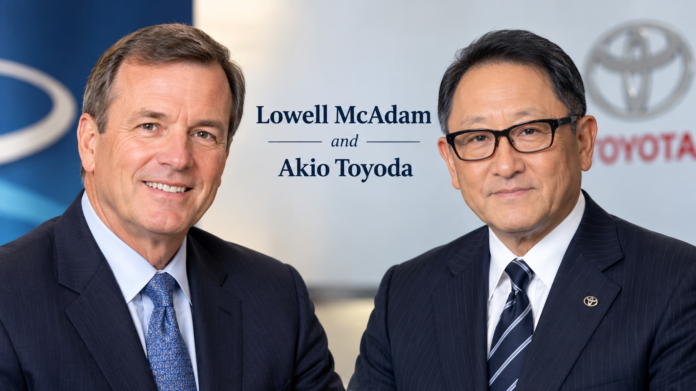
Lowell McAdam and Akio Toyoda are two influential business leaders who built their reputations in very different industries. Lowell McAdam is best known for his leadership at Verizon Communications, one of the major telecommunications companies in the United States. Akio Toyoda, meanwhile, is a prominent Japanese automotive executive who led Toyota Motor Corporation as president from 2009 to 2023 before becoming its chairman. Although their professional backgrounds differ, both men have played important roles in industries shaped by technology, innovation, and changing customer expectations.
The keyword Lowell McAdam and Akio Toyoda brings together two executives whose careers offer valuable lessons about corporate leadership, strategic planning, and managing large international businesses. McAdam worked in telecommunications during a period of rapid growth in wireless networks and digital services. Toyoda helped guide Toyota through economic challenges, technological changes, and growing competition in the global automotive market. Their experiences demonstrate how business leaders must adapt their strategies as industries evolve.
There is no widely documented evidence of a major personal relationship or direct business partnership between Lowell McAdam and Akio Toyoda. Their connection is best understood through a comparison of their careers and leadership experiences. By examining their professional journeys, readers can better understand how successful executives approach innovation, organizational change, and long-term business growth.
Who Is Lowell McAdam?
Lowell McAdam and Akio Toyoda C. McAdam is an American telecommunications executive best known for serving as chairman and chief executive officer of Verizon Communications. He became Verizon’s CEO on August 1, 2011, and took on the additional role of chairman in January 2012. His leadership came during an important period for the telecommunications industry, when mobile connectivity, smartphones, and faster wireless networks were becoming increasingly important to consumers and businesses.
McAdam developed his career through a combination of engineering knowledge, technical experience, and executive management. He earned a bachelor’s degree in engineering from Cornell University and a Master of Business Administration from the University of San Diego. He also served for six years in the U.S. Navy Civil Engineer Corps. This combination of technical education and management training helped prepare him for leadership roles in an industry that depends on complex infrastructure and continuous technological investment.
Before becoming Verizon’s CEO, McAdam held senior positions at several telecommunications companies. He worked at Pacific Bell and AirTouch Communications before becoming president and CEO of PrimeCo Personal Communications. He joined Verizon Wireless in 2000 and eventually became its president and CEO from 2007 to 2010. His experience across multiple organizations gave him a broad understanding of wireless operations, network development, and the competitive telecommunications market.
Lowell McAdam’s Career at Verizon
McAdam’s leadership at Verizon focused heavily on strengthening the company’s wireless business and expanding its network capabilities. Telecommunications companies must continually invest in infrastructure to meet rising demand for faster connections, dependable coverage, and greater data capacity. Under McAdam, Verizon continued investing in its network while competing with other major wireless providers for customers and business opportunities.
One of the most significant transactions during his tenure was Verizon’s 2014 acquisition of Vodafone’s 45 percent stake in Verizon Wireless. The approximately $130 billion transaction gave Verizon complete ownership of its wireless business. This was a major corporate deal that strengthened Verizon’s control over an important part of its operations and represented a significant moment in the company’s development. It also demonstrated McAdam’s willingness to pursue large strategic transactions to support the company’s long-term position.
McAdam’s tenure also included efforts to expand Verizon beyond traditional telecommunications services. The company invested in digital media and other technology-related businesses, including acquisitions involving AOL and Yahoo. Verizon also pursued opportunities in fiber networks and connected technologies. These decisions reflected a broader industry trend: telecommunications companies were looking for ways to diversify their businesses as internet services, digital content, and mobile connectivity became increasingly interconnected.
Lowell McAdam’s Leadership Style and Business Strategy
McAdam’s leadership approach emphasized network investment, operational performance, and strategic growth. Telecommunications is a capital-intensive industry, meaning companies must spend substantial amounts on infrastructure before they can generate returns from new services. Decisions about network coverage, equipment, spectrum, and technology upgrades can influence customer satisfaction and competitiveness for years. McAdam’s background in engineering and telecommunications operations gave him direct experience with these challenges.
Another important part of his strategy was recognizing the growing role of mobile connectivity in everyday life. Smartphones, cloud services, digital entertainment, and connected devices increased demand for dependable wireless networks. Verizon needed to improve its infrastructure while maintaining service quality and responding to competitors. McAdam’s tenure reflected the importance of treating network development as a long-term investment rather than simply a short-term expense.
His experience also highlights the challenges of diversification. Expanding into media and digital businesses can create new revenue opportunities, but acquisitions do not automatically guarantee success. Different businesses require different expertise, operating models, and investment priorities. McAdam’s career therefore provides a useful example of the difficult decisions executives face when trying to balance a company’s established strengths with opportunities in emerging markets.
Who Is Akio Toyoda?
Akio Toyoda is a Japanese business executive and a prominent figure in the global automotive industry. He was born on May 3, 1956, and is the grandson of Kiichiro Toyoda, who founded Toyota Motor Corporation. Despite his family connection to the company, Akio developed his career through experience in different parts of Toyota’s operations, including production, marketing, product development, and international business.
Toyoda graduated from Keio University with a degree in law in 1979 and later earned a Master of Business Administration from Babson College in the United States in 1982. He joined Toyota Motor Corporation in April 1984. His early professional experience helped him understand how the company operated across different departments and markets. He also gained valuable international experience through his work at New United Motor Manufacturing, Inc., Toyota’s joint venture with General Motors in California.
Over the following years, Toyoda advanced through increasingly senior positions within Toyota. He became a member of the company’s board of directors in 2000, served as executive vice president from 2005, and was appointed president in June 2009. In April 2023, he became chairman of Toyota’s board of directors. His career has been closely associated with efforts to strengthen Toyota’s competitiveness, improve its products, and maintain its position in the global automotive industry.
Akio Toyoda’s Leadership at Toyota
Toyoda became president of Toyota in 2009, a challenging period for the company and the wider automotive industry. The global financial crisis had affected consumer spending, vehicle demand, and business confidence. Toyota also faced significant pressure to maintain customer trust and protect its reputation for quality and reliability. His appointment placed him in charge of a large international company operating in a highly competitive market.
During his presidency, Toyoda emphasized the importance of producing better cars and maintaining a close connection between the company and its customers. Toyota’s business philosophy has long emphasized continuous improvement, efficiency, and quality. Under his leadership, the idea of making ever-better cars became a prominent part of the company’s direction. This approach encouraged attention to product development, driving experience, and the practical needs of customers in different markets.
Toyoda also supported a broader view of automotive technology. As manufacturers faced pressure to reduce emissions and develop new mobility solutions, Toyota continued investing in multiple powertrain technologies rather than relying exclusively on one approach. These included hybrid vehicles, battery-electric vehicles, and hydrogen-related technologies. The strategy reflected Toyota’s belief that different markets have different infrastructure, affordability, and energy requirements. It also generated debate about the speed and direction of the industry’s transition toward electric vehicles.
Lowell McAdam and Akio Toyoda: Leadership, Careers, and Achievements
Introduction
Lowell McAdam and Akio Toyoda are two influential business leaders who built their reputations in very different industries. Lowell McAdam and Akio Toyoda McAdam is best known for his leadership at Verizon Communications, one of the major telecommunications companies in the United States. Akio Toyoda, meanwhile, is a prominent Japanese automotive executive who led Toyota Motor Corporation as president from 2009 to 2023 before becoming its chairman. Although their professional backgrounds differ, both men have played important roles in industries shaped by technology, innovation, and changing customer expectations.
The keyword Lowell McAdam and Akio Toyoda brings together two executives whose careers offer valuable lessons about corporate leadership, strategic planning, and managing large international businesses. McAdam worked in telecommunications during a period of rapid growth in wireless networks and digital services. Toyoda helped guide Toyota through economic challenges, technological changes, and growing competition in the global automotive market. Their experiences demonstrate how business leaders must adapt their strategies as industries evolve.
There is no widely documented evidence of a major personal relationship or direct business partnership between Lowell McAdam and Akio Toyoda. Their connection is best understood through a comparison of their careers and leadership experiences. By examining their professional journeys, readers can better understand how successful executives approach innovation, organizational change, and long-term business growth.
Who Is Lowell McAdam?
Lowell McAdam and Akio Toyoda C. McAdam is an American telecommunications executive best known for serving as chairman and chief executive officer of Verizon Communications. He became Verizon’s CEO on August 1, 2011, and took on the additional role of chairman in January 2012. His leadership came during an important period for the telecommunications industry, when mobile connectivity, smartphones, and faster wireless networks were becoming increasingly important to consumers and businesses.
McAdam developed his career through a combination of engineering knowledge, technical experience, and executive management. He earned a bachelor’s degree in engineering from Cornell University and a Master of Business Administration from the University of San Diego. He also served for six years in the U.S. Navy Civil Engineer Corps. This combination of technical education and management training helped prepare him for leadership roles in an industry that depends on complex infrastructure and continuous technological investment.
Before becoming Verizon’s CEO, McAdam held senior positions at several telecommunications companies. He worked at Pacific Bell and AirTouch Communications before becoming president and CEO of PrimeCo Personal Communications. He joined Verizon Wireless in 2000 and eventually became its president and CEO from 2007 to 2010. His experience across multiple organizations gave him a broad understanding of wireless operations, network development, and the competitive telecommunications market.
Lowell McAdam’s Career at Verizon
McAdam’s leadership at Verizon focused heavily on strengthening the company’s wireless business and expanding its network capabilities. Telecommunications companies must continually invest in infrastructure to meet rising demand for faster connections, dependable coverage, and greater data capacity. Under McAdam, Verizon continued investing in its network while competing with other major wireless providers for customers and business opportunities.
One of the most significant transactions during his tenure was Verizon’s 2014 acquisition of Vodafone’s 45 percent stake in Verizon Wireless. The approximately $130 billion transaction gave Verizon complete ownership of its wireless business. This was a major corporate deal that strengthened Verizon’s control over an important part of its operations and represented a significant moment in the company’s development. It also demonstrated McAdam’s willingness to pursue large strategic transactions to support the company’s long-term position.
McAdam’s tenure also included efforts to expand Verizon beyond traditional telecommunications services. The company invested in digital media and other technology-related businesses, including acquisitions involving AOL and Yahoo. Verizon also pursued opportunities in fiber networks and connected technologies. These decisions reflected a broader industry trend: telecommunications companies were looking for ways to diversify their businesses as internet services, digital content, and mobile connectivity became increasingly interconnected.
Lowell McAdam’s Leadership Style and Business Strategy
McAdam’s leadership approach emphasized network investment, operational performance, and strategic growth. Telecommunications is a capital-intensive industry, meaning companies must spend substantial amounts on infrastructure before they can generate returns from new services. Decisions about network coverage, equipment, spectrum, and technology upgrades can influence customer satisfaction and competitiveness for years. McAdam’s background in engineering and telecommunications operations gave him direct experience with these challenges.
Another important part of his strategy was recognizing the growing role of mobile connectivity in everyday life. Smartphones, cloud services, digital entertainment, and connected devices increased demand for dependable wireless networks. Verizon needed to improve its infrastructure while maintaining service quality and responding to competitors. McAdam’s tenure reflected the importance of treating network development as a long-term investment rather than simply a short-term expense.
His experience also highlights the challenges of diversification. Expanding into media and digital businesses can create new revenue opportunities, but acquisitions do not automatically guarantee success. Different businesses require different expertise, operating models, and investment priorities. McAdam’s career therefore provides a useful example of the difficult decisions executives face when trying to balance a company’s established strengths with opportunities in emerging markets.
Who Is Akio Toyoda?
Akio Toyoda is a Japanese business executive and a prominent figure in the global automotive industry. He was born on May 3, 1956, and is the grandson of Kiichiro Toyoda, who founded Toyota Motor Corporation. Despite his family connection to the company, Akio developed his career through experience in different parts of Toyota’s operations, including production, marketing, product development, and international business.
Toyoda graduated from Keio University with a degree in law in 1979 and later earned a Master of Business Administration from Babson College in the United States in 1982. He joined Toyota Motor Corporation in April 1984. His early professional experience helped him understand how the company operated across different departments and markets. He also gained valuable international experience through his work at New United Motor Manufacturing, Inc., Toyota’s joint venture with General Motors in California.
Over the following years, Toyoda advanced through increasingly senior positions within Toyota. He became a member of the company’s board of directors in 2000, served as executive vice president from 2005, and was appointed president in June 2009. In April 2023, he became chairman of Toyota’s board of directors. His career has been closely associated with efforts to strengthen Toyota’s competitiveness, improve its products, and maintain its position in the global automotive industry.
Akio Toyoda’s Leadership at Toyota
Toyoda became president of Toyota in 2009, a challenging period for the company and the wider automotive industry. The global financial crisis had affected consumer spending, vehicle demand, and business confidence. Toyota also faced significant pressure to maintain customer trust and protect its reputation for quality and reliability. His appointment placed him in charge of a large international company operating in a highly competitive market.
During his presidency, Toyoda emphasized the importance of producing better cars and maintaining a close connection between the company and its customers. Toyota’s business philosophy has long emphasized continuous improvement, efficiency, and quality. Under his leadership, the idea of making ever-better cars became a prominent part of the company’s direction. This approach encouraged attention to product development, driving experience, and the practical needs of customers in different markets.
Toyoda also supported a broader view of automotive technology. As manufacturers faced pressure to reduce emissions and develop new mobility solutions, Toyota continued investing in multiple powertrain technologies rather than relying exclusively on one approach. These included hybrid vehicles, battery-electric vehicles, and hydrogen-related technologies. The strategy reflected Toyota’s belief that different markets have different infrastructure, affordability, and energy requirements. It also generated debate about the speed and direction of the industry’s transition toward electric vehicles.
Akio Toyoda’s Passion for Cars and Motorsports
One of the most distinctive aspects of Akio Toyoda’s career is his personal interest in automobiles and motorsports. Unlike executives who focus primarily on financial reports and corporate meetings, Toyoda has developed a public reputation for appreciating the driving experience itself. His involvement in motorsports reflects his belief that understanding how vehicles perform on real roads can help engineers develop better products.
Toyota’s motorsports activities have played an important role in this philosophy. Through racing programs, the company can test vehicle technologies, improve engineering capabilities, and develop employees’ technical skills under demanding conditions. Toyoda has supported Toyota Gazoo Racing, which connects the company’s motorsports activities with the development of performance-oriented vehicles. This approach has helped strengthen Toyota’s identity among drivers who value reliability as well as driving enjoyment.
Motorsports also offers a marketing advantage. Performance vehicles can create excitement around a brand, attract enthusiasts, and demonstrate engineering capabilities that may influence the development of ordinary road cars. Toyoda’s interest in this area illustrates how personal enthusiasm, product development, and business strategy can support one another. His career shows that a company’s identity can become stronger when its leadership understands what customers enjoy about its products. GAZOO Racing
Lowell McAdam and Akio Toyoda: Key Differences
Although Lowell McAdam and Akio Toyoda both led major international companies, their responsibilities were shaped by the different industries in which they worked. McAdam operated in telecommunications, where network infrastructure, data capacity, service reliability, and technological investment are essential to business success. Toyoda led an automotive manufacturer, where engineering, vehicle quality, production efficiency, safety, and customer preferences play central roles.
Their approaches to business investment also reflected these differences. McAdam focused heavily on expanding wireless network capabilities and strengthening Verizon’s position through acquisitions and infrastructure development. Toyoda emphasized product quality, manufacturing, customer needs, and a broad approach to vehicle technology. Both strategies required long-term planning, but the specific decisions and risks were different.
Another difference concerns their professional backgrounds and corporate responsibilities. McAdam developed his career through technical and management positions across several telecommunications organizations before becoming Verizon’s CEO. Toyoda spent much of his career at Toyota, gaining experience in different departments before leading the company. Comparing their experiences shows that executives can reach senior leadership through different routes, provided they develop the knowledge and judgment required to manage complex organizations. The Conference Board
What Lowell McAdam and Akio Toyoda Teach Us About Business Leadership
One important lesson from both careers is that successful leadership requires a clear understanding of an organization’s core business. McAdam’s engineering background helped him appreciate the infrastructure behind telecommunications services, while Toyoda’s experience across Toyota’s operations gave him insight into vehicle production, marketing, and product development. Leaders who understand how their organizations work are often better positioned to make informed strategic decisions.
A second lesson is the importance of adapting to technological change. Telecommunications companies must respond to developments in wireless networks, connected devices, and digital services. Automotive manufacturers face their own transformation through electrification, software, advanced safety systems, and changing transportation needs. Both industries demonstrate that companies cannot depend entirely on the products and business models that made them successful in the past.
A third lesson is that long-term growth requires more than ambitious plans. Leaders must consider customer needs, employee capabilities, financial resources, and the risks associated with major investments. Acquisitions, new technologies, and product launches can create opportunities, but they also require careful execution. The careers of McAdam and Toyoda illustrate why effective leadership involves balancing innovation with practical business decisions.
Lowell McAdam and Akio Toyoda’s Lasting Influence
Lowell McAdam and Akio Toyoda McAdam’s influence is closely associated with Verizon’s development during an important period in telecommunications. His tenure included the acquisition of full ownership of Verizon Wireless, substantial network investments, and efforts to expand into digital media and related businesses. These initiatives reflected the changing role of telecommunications companies as wireless connectivity became increasingly central to modern life.
Akio Toyoda’s influence extends across Toyota’s corporate strategy, product identity, and motorsports activities. During his presidency, he emphasized vehicle quality, customer-focused development, and the importance of making better cars. His later role as chairman allowed him to continue contributing to Toyota’s leadership and strategic direction after stepping down as president in 2023. In September 2026, he was inducted into the Automotive Hall of Fame in recognition of his contributions to the automotive industry. Toyota Newsroom
Their legacies are different because the challenges they faced were different. McAdam helped guide a telecommunications company through changes in wireless technology and digital services, while Toyoda led an automaker through economic uncertainty and major debates about the future of mobility. Both careers nevertheless demonstrate how decisions made by senior executives can influence industries, employees, customers, and future business strategies.
Frequently Asked Questions About Lowell McAdam and Akio Toyoda
1. Who is Lowell McAdam?
Lowell McAdam is an American business executive best known for serving as the chairman and CEO of Verizon Communications. He became CEO in August 2011 and chairman in January 2012. His career included leadership positions at Verizon Wireless and other telecommunications companies, with a strong focus on network development and business growth.
2. Who is Akio Toyoda?
Akio Toyoda is a Japanese business executive who served as president of Toyota Motor Corporation from 2009 to 2023. He became chairman in April 2023 and continues to serve as chairman. He is known for his work in automotive leadership, product development, quality improvement, and motorsports.
3. Are Lowell McAdam and Akio Toyoda related?
There is no widely documented evidence that Lowell McAdam and Akio Toyoda are related. They come from different professional backgrounds and are known primarily for their work in telecommunications and the automotive industry, respectively.
4. Did Lowell McAdam and Akio Toyoda work together?
There is no widely documented evidence of a major direct business partnership between McAdam and Toyoda. Although telecommunications technology supports connected vehicles and modern transportation systems, that general industry connection does not establish that the two executives worked together directly.
5. What are Lowell McAdam and Akio Toyoda best known for?
McAdam is best known for his former leadership of Verizon and his role in major wireless network investments and corporate transactions. Toyoda is best known for leading Toyota as president, promoting better vehicle development, and supporting the company’s motorsports activities. Both are recognized for their contributions to large international businesses.
Conclusion
Lowell McAdam and Akio Toyoda built successful careers by leading organizations through periods of technological and commercial change. McAdam helped shape Verizon’s position in the wireless telecommunications market through network investments, strategic acquisitions, and business expansion. Toyoda guided Toyota through important challenges while emphasizing product quality, customer satisfaction, and the development of better vehicles.
Their professional journeys offer useful lessons for entrepreneurs, business students, and readers interested in corporate leadership. Understanding an industry’s challenges, investing in long-term capabilities, responding to changing customer needs, and making thoughtful strategic decisions are important responsibilities for any executive.
Although Lowell McAdam and Akio Toyoda are associated with different industries, their careers provide a valuable comparison of leadership in large global organizations. The main takeaway from Lowell McAdam and Akio Toyoda is that lasting business influence comes from understanding an organization’s strengths, adapting to change, and making decisions that support its long-term future.
You May Also Read: Barbra Streisand and Millie Bobby Brown