
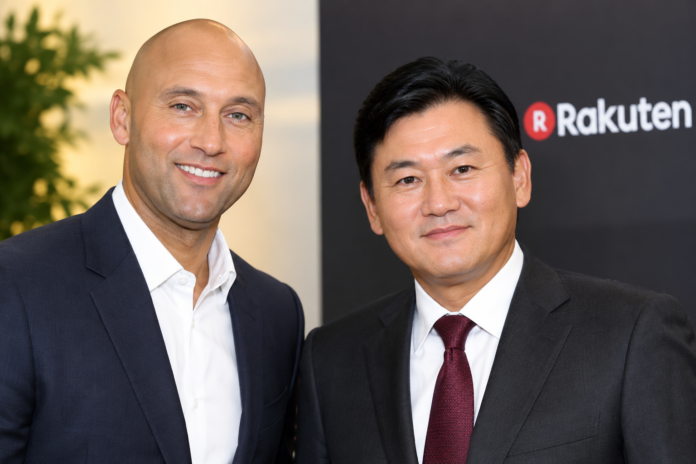

Derek Jeter and Hiroshi Mikitani are two successful figures who have made their mark in different industries while sharing an interest in the business and global influence of sports. Jeter became one of the most recognizable players in Major League Baseball through his legendary career with the New York Yankees. Mikitani, on the other hand, built an international business empire as the founder of Rakuten, a Japanese technology company with interests in e-commerce, financial services, telecommunications, and professional sports.
Although their professional backgrounds are different, both men demonstrate how leadership, ambition, and a willingness to make bold decisions can create lasting influence. Jeter earned recognition through his achievements on the baseball field before expanding into business and sports management. Mikitani developed his reputation by building a technology company and investing in sports organizations, including professional baseball in Japan.
However, one important detail deserves clarification: there is no widely documented evidence establishing Derek Jeter and Hiroshi Mikitani as direct business partners or close personal associates. Their connection is better understood through their shared involvement in the baseball industry and their different approaches to leadership, investment, and international sports. Understanding their backgrounds helps explain why these two names sometimes appear together in discussions about baseball and business.
Who Is Derek Jeter?
Derek Jeter and Hiroshi Mikitani Jeter is a former professional baseball player best known for his remarkable career with the New York Yankees. Born on June 26, 1974, in Pequannock Township, New Jersey, he grew up with a passion for baseball and developed the skills that eventually made him one of the sport’s most respected shortstops.
Jeter made his Major League Baseball debut in 1995 and quickly became an important part of the Yankees organization. His combination of defensive ability, consistent hitting, confidence, and leadership helped him become a central figure during one of the most successful periods in the franchise’s history. Over his 20-year MLB career, he helped the Yankees win five World Series championships.
His achievements extended beyond championship victories. Jeter earned 14 All-Star selections and became known for delivering important performances in high-pressure situations. Fans and teammates often referred to him as “The Captain,” a nickname that reflected his leadership and long-standing relationship with the Yankees. He retired after the 2014 season and was elected to the National Baseball Hall of Fame in 2020. His official biography from MLB highlights his historic career and later business activities.
Who Is Hiroshi Mikitani?
Hiroshi Mikitani is a Japanese entrepreneur and business executive best known for founding Rakuten Group. Born on March 11, 1965, in Kobe, Japan, he developed an interest in business and economics before building a career that would eventually make him one of the country’s most influential technology entrepreneurs.
Mikitani studied at Hitotsubashi University and began his professional career in banking. He later attended Harvard Business School, where he earned an MBA in 1993. His education and experience in finance helped him develop the business knowledge needed to launch his own company. In 1997, he founded the business that became Rakuten, initially focusing on online shopping and helping merchants reach customers through the internet.
Over time, Rakuten expanded into a wide range of services, including digital content, financial technology, telecommunications, and professional sports. Mikitani’s business philosophy emphasizes entrepreneurship, innovation, and creating opportunities through technology. His interests have also extended into sports ownership, making him an important figure in Japanese professional baseball and football.
Derek Jeter and Hiroshi Mikitani: What Connects Them?
The connection between Derek Jeter and Hiroshi Mikitani is best understood through their involvement in professional baseball. Jeter spent his career competing in Major League Baseball, while Mikitani became involved in the sport as a team owner and business leader in Japan.
Jeter’s career was closely associated with the New York Yankees, one of the most recognizable baseball franchises in the world. His achievements helped strengthen the Yankees’ international profile and made him a familiar name among baseball fans far beyond the United States. His influence continued after retirement through sports management, media, and investment activities.
Mikitani entered professional baseball from a different direction. Rather than becoming a player, he invested in the sport through business ownership. Rakuten acquired the Tohoku Rakuten Golden Eagles in Japan’s Nippon Professional Baseball system, helping establish the company as a significant participant in the Japanese sporting landscape. Mikitani’s official company biography lists his role in Rakuten Baseball among his professional responsibilities.
Their careers therefore intersect at the broader level of baseball’s international business environment. However, this shared interest should not be mistaken for evidence of a personal friendship, joint venture, or direct professional partnership. Their stories are connected by the sport rather than by a clearly documented business relationship.
Hiroshi Mikitani and the Rakuten Golden Eagles
The Tohoku Rakuten Golden Eagles represent one of Mikitani’s most visible contributions to Japanese professional baseball. The team entered Nippon Professional Baseball in 2005 after Rakuten became involved in the league during a period of significant organizational change.
Mikitani’s involvement reflected his belief that sports could be more than entertainment. A professional baseball organization can bring economic activity to a region, create jobs, attract visitors, and strengthen local identity. By investing in a team based in the Tohoku region, Rakuten established a sporting presence that connected the company with communities beyond Japan’s largest commercial centers.
The Golden Eagles achieved an important milestone by winning the Japan Series in 2013. Their championship success demonstrated the team’s ability to compete at the highest level of Japanese professional baseball. For Rakuten, the achievement also strengthened the company’s reputation as a serious sports organization rather than simply a technology business with a team attached to its name.
Mikitani’s involvement in baseball demonstrates how corporate leadership can influence professional sports. Investments in teams, stadium operations, player development, and fan engagement can shape both the sporting experience and the organization’s long-term financial prospects. These are areas where his experience offers an interesting comparison with Jeter’s later work in baseball management.
Derek Jeter’s Career After Retirement
Derek Jeter and Hiroshi Mikitani Jeter’s retirement from professional baseball did not end his involvement in the sport. Instead, he moved toward business, media, and team management, using his reputation and experience to explore opportunities beyond his playing career.
One of his most prominent ventures was The Players’ Tribune, a digital media platform launched in 2014. The platform was designed to give athletes a place to share their experiences and perspectives directly with readers. It reflected Jeter’s interest in changing how athletes communicate with fans and how sports stories are presented to the public.
Jeter also became involved in ownership and executive management. He served as part-owner and chief executive officer of the Miami Marlins from 2017 until 2022, overseeing aspects of the organization’s business and baseball operations. His executive role gave him experience with the challenges of managing a professional sports franchise, including roster decisions, business strategy, fan engagement, and organizational development.
His post-playing career illustrates that professional athletes can develop new identities after retirement. Jeter moved from being a player whose performance was measured through statistics and championships to an executive whose success depended on leadership, financial decisions, and organizational results.
How Their Leadership Styles Compare
Derek Jeter and Hiroshi Mikitani developed their leadership styles in very different environments. Jeter’s approach was shaped by professional competition, team culture, and the pressure of performing in front of millions of fans. Mikitani’s leadership developed through entrepreneurship, corporate strategy, and the challenge of growing a company in a rapidly changing technology market.
Jeter’s career emphasized consistency, preparation, teamwork, and composure. Baseball requires players to handle repeated challenges, including failure, injuries, and demanding expectations. His long career with the Yankees demonstrated the importance of maintaining performance over time and contributing to a larger team objective.
Mikitani’s professional experience emphasizes innovation, risk-taking, and long-term planning. Building Rakuten required him to recognize opportunities in online commerce and develop a business model capable of competing in an increasingly digital economy. His decisions also involved expanding into new markets and managing businesses in sectors with different operational requirements.
Despite these differences, both men demonstrate the importance of building a strong organization around a clear purpose. Jeter’s influence developed through his role within a championship team and later through executive management. Mikitani’s influence grew through business creation, investment, and corporate leadership. Their experiences show that effective leadership can take different forms depending on the industry and the challenges involved.
Derek Jeter and Hiroshi Mikitani’s Business Interests
Derek Jeter and Hiroshi Mikitani Jeter’s business interests developed alongside and after his baseball career. Beyond his work with The Players’ Tribune and the Miami Marlins, he has participated in business ventures and investments that expanded his professional profile. His experience illustrates how athletes can use their public reputation and industry knowledge to enter new markets.
For retired athletes, business opportunities can include media, endorsements, technology investments, hospitality, and sports ownership. However, a recognizable name does not automatically guarantee commercial success. Building a successful business requires financial planning, experienced management, a clear strategy, and the ability to respond to changing customer expectations.
Mikitani’s business interests operate on a broader corporate scale through Rakuten. The company began as an online marketplace and developed into an international group with interests in e-commerce, financial services, communications, and sports. Its diversified structure allows the company to operate across several industries rather than relying entirely on one source of revenue.
The contrast between their business activities is particularly interesting. Jeter’s commercial career grew from his achievements as an athlete, while Mikitani’s sports involvement grew from his achievements as an entrepreneur. Both approaches show how experience, reputation, and strategic decisions can create opportunities beyond a person’s original profession.
The Role of International Baseball
Baseball has a long history in both the United States and Japan, making it a natural connection between Jeter’s career and Mikitani’s sports investments. Although the two countries have different sporting systems and business environments, baseball has developed a strong international following that connects players, teams, and fans across borders.
Major League Baseball attracts talented players from Japan, while Japanese professional baseball offers its own competitive environment, fan culture, and business opportunities. The movement of players between the two systems has helped increase interest in international baseball and encouraged organizations to pay closer attention to overseas talent.
Mikitani’s involvement with the Golden Eagles places him within Japan’s professional baseball structure. Jeter’s career with the Yankees placed him at the center of the American game during a period when MLB continued to attract international attention. Their careers therefore represent different sides of a sport that operates as both a national tradition and an international industry.
This global dimension also creates opportunities for businesses connected to sports. Sponsorships, broadcasting, merchandise, ticketing, digital media, and international marketing can help teams reach audiences beyond their home markets. Baseball’s international growth provides a useful context for understanding why business leaders such as Mikitani and sports figures such as Jeter remain relevant to discussions about the future of professional sports.
What Can We Learn From Derek Jeter and Hiroshi Mikitani?
One lesson from Jeter’s career is the value of consistency. His success did not depend on one exceptional season or a single championship. Instead, he built a reputation through years of preparation, dependable performance, and an ability to contribute under pressure. These qualities are relevant to anyone pursuing long-term professional success.
Mikitani’s career offers a different lesson: recognizing opportunities and being willing to take calculated risks can create significant results. Leaving a traditional banking career to establish a technology company involved uncertainty, but his decision helped him build a business with an international presence. His journey demonstrates the importance of combining a clear vision with the ability to adapt as markets change.
Their stories also highlight the importance of learning beyond an original profession. Jeter explored media and executive leadership after retirement, while Mikitani expanded from online commerce into telecommunications, finance, and sports. Both men demonstrate that professional growth often requires developing new skills and considering opportunities outside familiar environments.
Finally, their careers show why reputation and execution must work together. Recognition can open doors, but sustained results depend on sound decisions, capable teams, and long-term commitment. Whether in baseball or business, lasting influence is built through more than public attention alone.
Frequently Asked Questions About Derek Jeter and Hiroshi Mikitani
Are Derek Jeter and Hiroshi Mikitani business partners?
There is no widely documented public evidence confirming that Derek Jeter and Hiroshi Mikitani are direct business partners. Their professional stories overlap through baseball, but their known business activities have developed separately.
Who is Hiroshi Mikitani?
Hiroshi Mikitani is a Japanese entrepreneur who founded Rakuten Group in 1997. He is known for expanding the company into e-commerce, financial services, telecommunications, and professional sports.
Why is Derek Jeter famous?
Derek Jeter and Hiroshi Mikitani Jeter is famous for his 20-year career with the New York Yankees, during which he won five World Series championships. He was inducted into the National Baseball Hall of Fame in 2020.
Does Hiroshi Mikitani own a baseball team?
Mikitani is associated with Rakuten’s ownership of the Tohoku Rakuten Golden Eagles, a professional baseball team competing in Japan’s Nippon Professional Baseball system. His company biography identifies his role in Rakuten Baseball.
Did Derek Jeter become a businessman after retiring?
Yes. Following his retirement in 2014, Jeter became involved in media, investments, and sports management. His major roles included founding The Players’ Tribune and serving as the Miami Marlins’ part-owner and CEO from 2017 to 2022.
What do Derek Jeter and Hiroshi Mikitani have in common?
Both have made significant contributions to the broader baseball industry, although from different positions. Jeter built his reputation as a player and later worked in sports management, while Mikitani became involved through corporate ownership and investment.
Final Thoughts on Derek Jeter and Hiroshi Mikitani
Derek Jeter and Hiroshi Mikitani represent two different paths to influence in the world of sports and business. Jeter earned his reputation through outstanding performances with the New York Yankees before exploring entrepreneurship and executive leadership. Mikitani built Rakuten into a diversified technology company and extended his business interests into professional sports.
Their stories are connected by baseball’s international reach, but it is important not to suggest a direct partnership without reliable evidence. Their careers are more useful as separate examples of how leadership, ambition, and strategic thinking can create opportunities in different professional environments.
For readers interested in sports, entrepreneurship, and business leadership, both men offer valuable perspectives. Jeter’s journey highlights the importance of consistency and teamwork, while Mikitani’s career demonstrates the potential of innovation and calculated risk-taking. Together, their stories illustrate how success can develop in very different ways while still leaving a lasting mark on an industry.