
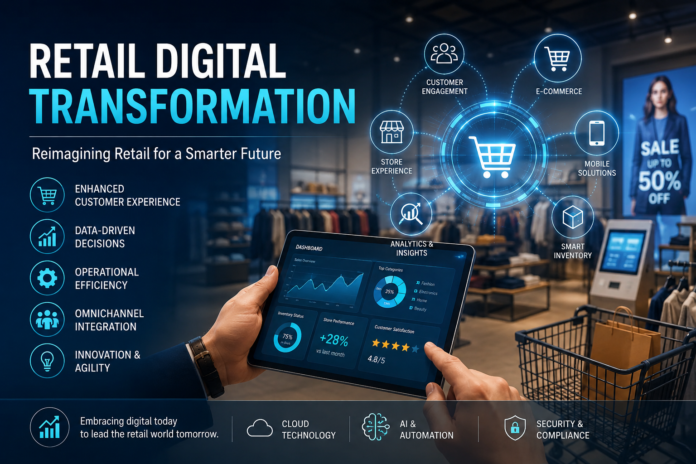

Retail digital transformation is no longer just about putting a store online or adding a mobile app. It is a much bigger shift in how retailers operate, understand customers, manage products, and create better shopping experiences. From artificial intelligence and data analytics to cloud platforms, self-checkout systems, and personalized recommendations, technology is changing almost every part of the retail industry.
Today’s shoppers expect convenience. They want to check product availability before visiting a store, compare prices quickly, receive relevant recommendations, and move between online and offline shopping without friction. Retailers that understand these expectations can use digital transformation to build stronger customer relationships and improve their business operations.
In this guide, we will explain what retail digital transformation means, why it matters, the technologies behind it, its major benefits, common challenges, and practical ways retailers can build a successful digital transformation strategy.
What Is Retail Digital Transformation?
Retail digital transformation is the process of using modern digital technologies to improve the way a retail business operates and serves its customers. It can affect everything from inventory management and marketing to payment systems, customer service, supply chains, and in-store experiences.
A traditional retailer might depend heavily on physical stores, manual processes, and basic customer data. A digitally transformed retailer, on the other hand, may use cloud software, artificial intelligence, real-time analytics, mobile technology, and connected systems to make faster and more informed decisions.
The important point is that digital transformation is not simply about buying new technology. Technology is only one part of the process. Successful transformation also requires retailers to rethink their business processes, train employees, understand customer behavior, and create a culture that supports continuous improvement.
Why Is Digital Transformation Important in Retail?
Customer expectations have changed dramatically. People are used to fast digital experiences in almost every area of life, so they naturally expect the same level of convenience when shopping. A slow website, inaccurate inventory information, complicated checkout process, or poor customer service can quickly push shoppers toward another retailer.
Digital transformation helps retailers respond to these expectations. For example, a customer might discover a product through social media, research it on a retailer’s website, check whether it is available at a nearby store, and then choose between home delivery and store pickup. A connected Retail Digital Transformation system can make this journey feel simple and consistent.
It also helps retailers compete in a crowded market. Businesses can use customer data and technology to identify trends, improve operations, reduce unnecessary costs, and create more personalized experiences. In a competitive industry, even small improvements can make a meaningful difference.
Key Technologies Driving Retail Digital Transformation
Technology is at the heart of modernRetail Digital Transformation transformation, but different technologies solve different business problems. Retailers do not necessarily need every new tool available. The goal is to select technologies that support specific customer and business needs.
Artificial Intelligence and Machine Learning
Artificial intelligence is becoming increasingly useful in Retail Digital Transformation. Retailers can use AI to analyze large amounts of information, identify patterns, automate routine tasks, and support better decision-making.
One common example is personalized product recommendations. AI systems can analyze shopping behavior and suggest products that may be relevant to individual customers. Retailers can also use AI for demand forecasting, customer service chatbots, fraud detection, and inventory planning.
Machine learning can become more useful over time because systems can learn from new data. When implemented responsibly, this can help retailers make decisions faster while giving customers more relevant experiences.
Data Analytics
Retailers generate enormous amounts of data through websites, mobile apps, stores, loyalty programs, transactions, and marketing campaigns. Without proper analytics, much of this information remains underused.
Data analytics allows retailers to understand what customers are buying, when demand changes, which products perform well, and where improvements may be needed. Managers can use these insights to make decisions based on evidence rather than assumptions.
Analytics can also help retailers measure marketing performance. Instead of simply asking whether a campaign received attention, businesses can examine conversions, customer behavior, repeat purchases, and other useful performance indicators.
Cloud Computing
Cloud technology has become an important part of Retail Digital Transformation digital transformation because it gives businesses flexible access to software, data, and computing resources.
Cloud-based systems can make it easier for retailers to connect stores, websites, inventory systems, customer data, and business applications. They can also support businesses as they grow without requiring every system to be managed through traditional on-site infrastructure.
Another advantage is accessibility. Authorized teams can access important business information from different locations, helping companies respond more quickly to changes in demand and customer behavior.
Internet of Things
The Internet of Things, often called IoT, connects physical devices to digital systems. In Retail Digital Transformation, this can include smart shelves, connected inventory devices, sensors, beacons, cameras, and other equipment.
IoT technology can help retailers monitor inventory and store conditions in real time. For example, connected systems may provide information about stock levels or help employees identify when certain products need attention.
The technology can also support better operational efficiency. When physical stores are connected to digital platforms, retailers can gain a clearer picture of what is happening across their locations.
Mobile Technology
Smartphones have become an important part of the shopping journey. Customers use them to search for products, compare prices, read reviews, receive offers, make payments, and communicate with brands.
Retailers can use mobile apps and mobile-friendly websites to create smoother customer experiences. Mobile technology can also connect online shopping with physical stores through features such as digital receipts, loyalty programs, product scanning, and store pickup.
The key is to make mobile experiences genuinely useful rather than simply creating an app because competitors have one.
Omnichannel Retail and Digital Transformation
One of the biggest goals of retail digital transformation is creating an omnichannel customer experience. Omnichannel Retail Digital Transformation means connecting different shopping channels so customers can move between them easily.
For example, someone may browse products online, visit a physical store to see an item, purchase it through a mobile device, and later contact customer service. If these channels are properly connected, the customer does not have to start from the beginning each time.
This requires retailers to connect important systems, including inventory, customer information, order management, websites, mobile platforms, and physical stores. When these systems work together, retailers can provide more consistent experiences.
Omnichannel transformation can also help businesses understand the complete customer journey. Instead of looking at online and offline shoppers as completely separate groups, retailers can understand how different channels influence each other.
How Retail Digital Transformation Improves Customer Experience
Customer experience is one of the strongest reasons retailers invest in digital transformation. Modern technology can make shopping faster, easier, and more personalized.
Personalization is a good example. Instead of showing every customer exactly the same products and promotions, retailers can use relevant information to create more useful recommendations. Customers may receive suggestions based on previous purchases, browsing activity, or stated preferences.
Digital transformation can also reduce common sources of frustration. Real-time inventory information can help customers know whether an item is available. Digital payment options can speed up checkout. Online order tracking can provide greater visibility after a purchase.
When these improvements are combined, customers may feel that the retailer understands their needs rather than simply trying to sell them something.
Benefits of Retail Digital Transformation
Better Customer Experiences
Digital tools allow retailers to create convenient and connected shopping journeys. Customers can have more choices regarding how they discover, purchase, receive, and return products.
Improved Operational Efficiency
Automation can reduce repetitive manual work. Retailers can use digital systems to manage inventory, process orders, monitor performance, and coordinate operations more efficiently.
Smarter Business Decisions
Real-time data and analytics give retailers better information for making decisions. Businesses can identify trends faster and respond to changing customer demand.
Better Inventory Management
Inventory problems can be expensive. Too much stock can increase storage costs, while too little stock can lead to missed sales. Digital tools can help retailers improve forecasting and monitor inventory more effectively.
Increased Customer Loyalty
Personalized experiences, convenient services, and reliable customer support can encourage shoppers to return. Loyalty programs can also become more effective when retailers use customer data responsibly.
Greater Business Agility
Retail Digital Transformation markets can change quickly. Digitally capable businesses are often better positioned to test new ideas, adjust operations, and respond to changing consumer behavior.
Common Challenges in Retail Digital Transformation
Although digital transformation offers major opportunities, it is not always easy. One of the biggest challenges is cost. New software, hardware, training, cybersecurity, and system integration can require significant investment.
Another challenge is outdated technology. Many established retailers still rely on legacy systems that were built years ago. Connecting these systems with modern platforms can be complicated and may require careful planning.
Employee adoption is another important factor. A new system will not deliver its full value if employees do not understand how to use it. Retailers should provide practical training and explain how new technology can make employees’ jobs easier.
Data security is also critical. Retailers handle sensitive customer and business information, so cybersecurity and responsible data management must be part of any transformation strategy.
How to Create a Successful Retail Digital Transformation Strategy
A successful transformation usually starts with the customer rather than the technology. Retailers should identify the biggest problems customers face and then determine which digital solutions can address those problems.
The next step is to evaluate existing systems and processes. Businesses should identify what is working, what is outdated, and where information is trapped in separate systems. This creates a clearer roadmap for future improvements.
Retailers should also avoid trying to transform everything at once. Starting with manageable projects can make it easier to measure results, learn from mistakes, and build support for larger initiatives. For example, a retailer might begin by improving inventory visibility before moving into more advanced AI applications.
Finally, businesses should measure results. Useful metrics may include conversion rates, customer satisfaction, order accuracy, inventory turnover, operational costs, repeat purchases, and digital sales. Measuring these outcomes helps companies understand whether their investments are producing real value.
The Role of Employees in Digital Transformation
Technology cannot replace the importance of people in Retail Digital Transformation. Employees interact directly with customers and often understand problems that may not appear in business reports.
Retailers should involve employees during transformation projects. Their feedback can reveal practical issues and help businesses design systems that work in real-world situations.
Training is equally important. Employees need to understand not only how to use a new digital tool but also why the business introduced it. When people understand the purpose behind a change, they are more likely to support it.
The Future of Retail Digital Transformation
The future of Retail Digital Transformation will likely become even more connected, personalized, and data-driven. Artificial intelligence, automation, augmented reality, connected devices, and advanced analytics are expected to continue influencing how people shop.
Physical stores are also unlikely to disappear simply because digital commerce is growing. Instead, stores may become more integrated with digital experiences. Customers could use technology in stores to find products, access information, receive personalized recommendations, or complete purchases more conveniently.
The retailers that succeed will not necessarily be the ones using the most technology. They will be the businesses that use technology thoughtfully to solve customer problems and improve their operations.
Final Thoughts on Retail Digital Transformation
Retail digital transformation is much more than moving traditional retail processes onto digital platforms. It is about creating a smarter, more connected, and customer-focused Retail Digital Transformation business.
From AI and analytics to cloud computing, mobile technology, IoT, and omnichannel platforms, digital tools can help retailers improve almost every stage of the customer journey. However, technology alone does not guarantee success. Retailers also need strong planning, employee support, data security, customer-focused thinking, and a willingness to continuously improve.
For businesses that approach transformation strategically, digital technology can become more than an investment. It can become a foundation for long-term growth, stronger customer relationships, and a more adaptable Retail Digital Transformation business.
You May Also Read: Nigeria Cloud Security Consulting Business Model