
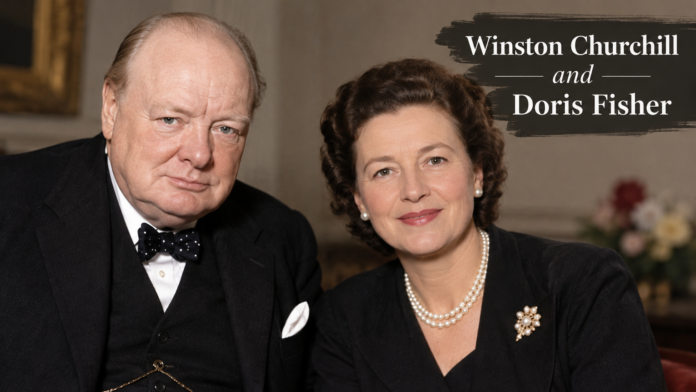

The keyword “Winston Churchill and Doris Fisher” brings together two names that may lead readers to explore history, personal biographies, and the lives of influential public figures. Winston Churchill is widely remembered as Britain’s wartime prime minister, an accomplished writer, and one of the most recognisable political leaders of the 20th century. Doris Fisher, meanwhile, is a name associated with more than one individual, including the American businesswoman and philanthropist connected with the Gap clothing company.
Although both names have their own historical and biographical significance, it is important to establish whether a documented personal, professional, or family connection exists between them before presenting them as a pair. There is no widely established historical relationship between British Prime Minister Winston Churchill and Doris Fisher, the co-founder of Gap Inc., in the major biographical accounts commonly consulted.
This article explores Winston Churchill and Doris Fisher Churchill’s life, Doris Fisher’s background, their respective contributions, and the reasons readers may encounter both names together online. By separating documented facts from assumptions, we can better understand each person’s legacy without creating a connection that reliable historical evidence does not establish.
Who Was Winston Churchill?
Winston Churchill and Doris Fisher Churchill was one of the most influential British political leaders of the 20th century. Born on November 30, 1874, at Blenheim Palace in Oxfordshire, England, he came from an aristocratic family with a long history of public service. His father, Lord Randolph Churchill, was a prominent politician, while his mother, Jennie Jerome, was an American-born socialite. Churchill’s background gave him early exposure to politics, public life, and the expectations associated with his family’s position. GOV.UK
Churchill initially pursued a military career after studying at the Royal Military Academy Sandhurst. He served as a soldier and worked as a war correspondent, experiences that helped him develop the communication skills and public profile that later supported his political ambitions. He entered the British Parliament in 1900 and went on to hold several important government positions under both Conservative and Liberal administrations. His political career included periods of considerable influence as well as setbacks that tested his reputation and determination. HISTORY TV Denmark
His place in world history became especially significant during the Second World War. Churchill became prime minister in May 1940, when Britain faced the threat of Nazi Germany and the future of Europe appeared uncertain. His speeches, public appearances, and leadership helped sustain British morale during a period of extreme danger. He served as prime minister until 1945 and returned to the position from 1951 to 1955. Churchill died on January 24, 1965, leaving behind a complicated legacy that continues to attract historical debate. GOV.UK
Winston Churchill’s Early Life and Education
Churchill’s childhood was shaped by wealth, family expectations, and the social traditions of Britain’s upper class. Despite his privileged background, his early school years were not particularly successful. Historical accounts describe him as a student who struggled in some subjects and developed a strong interest in history, literature, and military affairs. These interests would later become important parts of his professional life.
His education eventually took him to Sandhurst, where he trained for military service. After graduating, he joined the British Army and travelled to different parts of the world. His experiences in places such as India, Cuba, and South Africa gave him opportunities to observe military campaigns and write about international events. His work as a correspondent also helped him gain public attention before he became a major political figure.
Writing became an important part of Churchill’s life from an early age. He produced books, newspaper articles, historical accounts, and political commentary throughout his career. These activities helped him build a reputation beyond Parliament and provided an additional source of income during periods when he held no senior government office. His later recognition as a Nobel Prize-winning author demonstrated that his influence extended beyond politics. Nobel Prize
Who Is Doris Fisher?
Doris Fisher was an American entrepreneur, philanthropist, and influential figure in the fashion retail industry. Born Doris Feigenbaum in San Francisco in 1931, she became best known as the co-founder of Gap Inc., the company behind the Gap clothing brand and several other major retail businesses. Her career demonstrated how a practical business idea could develop into an internationally recognised company. Gap Inc.
Fisher studied economics at Stanford University, graduating in 1953. She later married Donald Fisher, and together they established their first Gap store in San Francisco in 1969. The original business focused on selling Levi’s jeans and music records, responding to a market in which younger shoppers wanted a straightforward place to find popular casual clothing. The idea proved successful and eventually developed into a much larger retail operation. California Museum
Doris Fisher was not simply the wife of a businessman. She was an equal partner in the original venture and played an important role in shaping the company’s merchandising, products, and identity. Her work helped establish Gap as a recognisable fashion retailer, while her later philanthropic activities supported education and the arts. She died in May 2026 at the age of 94, leaving a substantial legacy in American business and cultural life. Gap Inc.
Doris Fisher and the Founding of Gap Inc.
The story of Gap began with a relatively simple problem. Donald Fisher had difficulty finding jeans that fitted him properly, which encouraged the couple to consider a different approach to clothing retail. Instead of treating the experience as an ordinary shopping frustration, they recognised an opportunity to serve customers who wanted convenient access to denim and other popular products.
In 1969, Doris and Donald Fisher opened their first store on Ocean Avenue in San Francisco. The shop initially sold Levi’s jeans alongside records and tapes. The concept appealed to customers looking for fashionable casual clothing, and the company began expanding as demand increased. Gap’s early growth showed how understanding customer needs could become the foundation of a successful retail business. Gap Inc.
Doris Fisher contributed to the company’s direction through her understanding of merchandising and consumer preferences. Her influence helped shape the store’s product selection and visual identity, while the business developed into a larger retail organisation. Gap later expanded its portfolio to include brands such as Banana Republic and Old Navy. Although the company evolved over the decades, its early emphasis on accessible casual clothing remained central to its identity. Gap Inc.
Doris Fisher’s Business Achievements and Financial Success
Doris Fisher’s business achievements demonstrate the importance of identifying customer needs and turning a practical idea into a sustainable company. Gap grew from a single shop into a major retail business with an international presence. The company’s expansion created opportunities across product development, advertising, merchandising, and store operations.
Her financial success was closely associated with her ownership and involvement in Gap Inc. However, it is important to distinguish between the value of a company, an individual’s ownership stake, and personal net worth. These figures can change over time because of stock prices, investments, estate arrangements, and other financial considerations. Without a verified financial disclosure covering the relevant period, a precise estimate of Fisher’s personal wealth should not be treated as definitive.
Beyond commercial success, Fisher demonstrated that business leadership could involve a long-term commitment to community initiatives. She and her husband supported cultural institutions and educational organisations, helping extend their influence beyond retail. Her story is particularly significant because she built her career during a period when women often had fewer opportunities to receive recognition as major business leaders. Gap Inc.
Doris Fisher’s Philanthropy and Contribution to the Arts
Doris Fisher’s influence extended well beyond fashion retail. She and Donald Fisher developed an important collection of modern and contemporary art, reflecting their long-standing interest in creative expression. In 2009, the family pledged more than 1,100 works from their collection to the San Francisco Museum of Modern Art. The gift became an important contribution to the museum’s collection and public cultural life. Gap Inc.
Education was another significant part of Fisher’s philanthropic work. She supported initiatives intended to improve educational opportunities for children and young people, including her involvement with KIPP public schools. Her efforts reflected a belief that access to education could help individuals develop their abilities and build better futures.
Her philanthropic activities also helped shape the wider public understanding of the Fisher family. Their legacy was not limited to financial success or the growth of a clothing brand. Through their support for art, education, and community organisations, Doris and Donald Fisher helped direct resources toward institutions that could benefit future generations. This combination of entrepreneurship and philanthropy remains an important part of her story. Gap Inc.
Is There a Connection Between Winston Churchill and Doris Fisher?
One of the most important questions surrounding the keyword Winston Churchill and Doris Fisher is whether these two people had a documented relationship. Based on the major biographical and institutional sources consulted for this article, no established family, business, or personal connection between the British prime minister and the Gap co-founder has been identified.
Their lives belonged to different periods and professional worlds. Winston Churchill and Doris Fisher Churchill was born in 1874 and died in 1965, while Doris Fisher was born in 1931 and died in 2026. Churchill became internationally known for his political leadership, writing, and wartime speeches. Fisher became known for her role in building a major American retail company and for her philanthropic contributions. GOV.UK
It is possible for two names to appear together in search results, online discussions, or keyword lists without the people sharing a meaningful historical connection. Search engines may display related phrases because users search for multiple biographies, compare influential people, or explore unrelated historical subjects in the same session. Unless a reliable source provides evidence of a specific connection, it is more accurate to discuss Churchill and Fisher separately rather than imply a relationship that has not been established.
Comparing Winston Churchill and Doris Fisher
Although Winston Churchill and Doris Fisher worked in different fields, their biographies provide interesting examples of how individuals can influence society in different ways. Churchill shaped political history through public service, government leadership, and writing. Fisher influenced consumer culture through retail entrepreneurship, merchandising, and philanthropy.
Their professional achievements also reflected different kinds of leadership. Churchill worked within political institutions and faced the responsibilities of national government during wartime. Fisher helped develop a commercial organisation by identifying customer needs and working to establish a distinctive retail identity. Both careers required decision-making, long-term planning, and the ability to respond to changing circumstances, although their responsibilities were very different.
Their legacies should also be considered within their proper historical contexts. Churchill remains a central figure in discussions of the Second World War, but his record also includes controversial political views and policies that historians continue to examine. Fisher is remembered for her contribution to retail and philanthropy, particularly her role in establishing Gap alongside her husband. Comparing their achievements does not mean they had a personal relationship; rather, it highlights the different ways individuals can leave a lasting mark on history.
Why Are People Searching for Winston Churchill and Doris Fisher?
People search for combinations of names for many reasons. They may be researching historical figures, preparing articles, investigating a family connection, or trying to identify whether two individuals appeared in the same event or publication. Sometimes, a search phrase reflects curiosity rather than an established relationship.
In the case of Winston Churchill and Doris Fisher, the two biographies cover subjects that are usually discussed separately. Churchill is associated with British politics, the Second World War, international diplomacy, and historical writing. Fisher is associated with American retail, the development of Gap Inc., art collecting, and educational philanthropy. These differences make it particularly important to explain each person’s background clearly.
For readers researching this keyword, the best approach is to begin with reliable biographies and institutional records. Official historical archives, company histories, university publications, and reputable news organisations can help establish dates, achievements, and documented relationships. If a particular claim suggests that Churchill and Fisher met or were related, it should be supported by evidence before being repeated as fact.
Frequently Asked Questions About Winston Churchill and Doris Fisher
1. Who was Winston Churchill?
Winston Churchill and Doris Fisher Churchill was a British politician, writer, and statesman who served as prime minister from 1940 to 1945 and again from 1951 to 1955. He is particularly remembered for leading Britain during the Second World War and for his influential speeches and historical writings. He received the Nobel Prize in Literature in 1953. GOV.UK
2. Who was Doris Fisher?
Doris Fisher was an American entrepreneur and philanthropist who co-founded Gap Inc. with her husband, Donald Fisher, in 1969. She helped shape the company’s merchandising and identity and supported educational and cultural initiatives. She died in May 2026 at the age of 94. Gap Inc.
3. Were Winston Churchill and Doris Fisher related?
No reliable biographical source consulted for this article establishes a family relationship between Winston Churchill and Doris Fisher. Their documented backgrounds concern different families, countries, and professional fields.
4. Did Winston Churchill and Doris Fisher work together?
There is no widely documented evidence that Churchill and Fisher worked together on a political, commercial, or philanthropic project. Churchill’s principal career was in British public life, while Fisher’s best-known work involved American retail and philanthropy.
5. Why are their names mentioned together online?
Their names may appear together because people search for multiple public figures, compile biographical content, or explore unrelated historical topics. The appearance of two names in a search phrase does not itself establish a connection between them.
Conclusion
Winston Churchill and Doris Fisher are remembered for very different contributions to society. Churchill shaped British political history through his leadership during the Second World War, his public service, and his extensive writing. Doris Fisher helped build Gap Inc. into a major retail business while supporting education, the arts, and community initiatives.
Although their names appear together in the keyword Winston Churchill and Doris Fisher, the available biographical evidence does not establish a direct relationship between them. Understanding their individual histories provides a clearer and more accurate picture of their achievements.
For anyone researching these names, the most useful approach is to rely on documented facts rather than assumptions. Churchill’s political legacy and Fisher’s entrepreneurial and philanthropic achievements each deserve to be understood on their own terms. Their stories illustrate two different ways individuals can influence society, one through public leadership and the other through business innovation and community support.
YOu May Also Read: