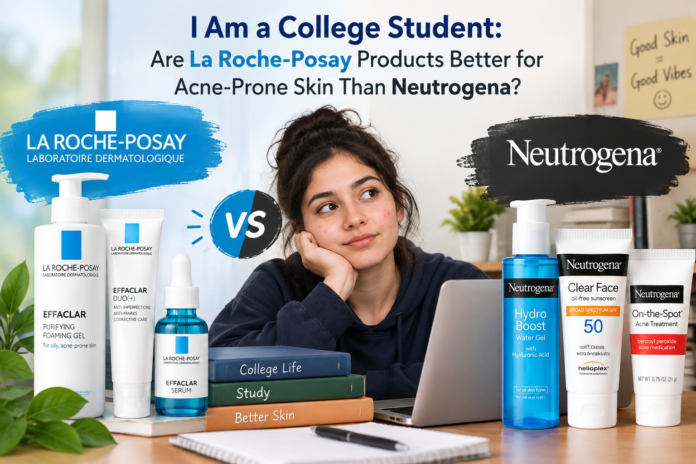

I Am a College Student Are La Roche-Posay Products Better for Acne-Prone Skin Than Neutrogena? College life can make skincare surprisingly difficult. Between classes, studying, stress, changing schedules, and limited budgets, maintaining a consistent skincare routine is not always easy. If you have acne-prone skin, choosing the right products can feel even more confusing. Two brands that often come up when people search for acne-friendly skincare are La Roche-Posay and Neutrogena.
So, are La Roche-Posay products better for acne-prone skin than Neutrogena? The short answer is: not necessarily. Both brands offer products designed for acne-prone skin, and both use well-known acne-fighting ingredients such as salicylic acid, benzoyl peroxide, and adapalene. The better choice depends on your skin type, the kind of acne you experience, your sensitivity to certain ingredients, and your college budget.
For a college student, the most useful approach is not simply choosing the more expensive or more popular brand. Instead, look at the active ingredients, how your skin responds, how simple the routine is, and whether you can afford to use the products consistently.
La Roche-Posay and Neutrogena: What Is the Difference?
La Roche-Posay is a skincare brand known for products aimed at different skin concerns, including sensitive and acne-prone skin. Its Effaclar range is specifically designed for oily and blemish-prone skin. The current Effaclar lineup includes products featuring ingredients such as salicylic acid, benzoyl peroxide, and adapalene.
Neutrogena also has a large acne skincare range. Its current acne collection includes cleansers, spot treatments, exfoliants, moisturizers, acne patches, benzoyl peroxide products, salicylic acid products, and adapalene 0.1% treatment. That means students have many different options depending on the type of breakout they are dealing with.
The biggest difference, therefore, is not that one brand treats acne while the other does not. Both brands have legitimate acne-focused options. The more important question is which specific product and active ingredient fit your skin and your routine.
Why Ingredients Matter More Than the Brand Name
When shopping for acne skincare, it is easy to focus on packaging, online popularity, or what other students are using. However, the active ingredient is usually much more important. The American Academy of Dermatology lists benzoyl peroxide, topical retinoids such as adapalene, salicylic acid, and azelaic acid among recommended acne treatments.
Salicylic acid is particularly useful when clogged pores, blackheads, and whiteheads are part of the problem. It works by helping exfoliate the skin and unclog pores. The AAD notes that salicylic acid works best for whiteheads and blackheads.
Benzoyl peroxide is another common acne ingredient. It is especially useful for mild pimples and inflammatory breakouts. The AAD recommends starting with a lower concentration, such as 2.5%, because higher concentrations can increase dryness and irritation without necessarily providing better results.
Is La Roche-Posay Good for Acne-Prone Skin?
La Roche-Posay has a dedicated Effaclar range for acne-prone and oily skin. Its products include acne cleansers, salicylic acid treatments, benzoyl peroxide treatments, and adapalene gel. This makes the brand relevant for students who want to build an acne-focused routine from products within one skincare range.
One example is the Effaclar Medicated Gel Cleanser, which contains salicylic acid and is designed for concerns including red pimples, blackheads, whiteheads, clogged pores, oily skin, and uneven texture.
La Roche-Posay also offers an adapalene 0.1% gel. Adapalene is a topical retinoid used for treating and preventing acne, particularly clogged pores, blackheads, and whiteheads. The brand describes its product as fragrance-free, non-comedogenic, and oil-free.
That does not automatically make every La Roche-Posay product better than every Neutrogena product. It simply means La Roche-Posay has several options that may be useful for people dealing with different acne concerns.
Is Neutrogena Good for Acne-Prone Skin?
Neutrogena has been offering acne-focused products for many years, and its current range is quite broad. Students can find cleansers, spot treatments, acne patches, moisturizers, exfoliating products, and treatments containing different active ingredients.
For example, Neutrogena currently offers products containing salicylic acid for clogged pores and breakouts. Its acne collection also includes benzoyl peroxide treatments and an adapalene 0.1% acne treatment.
This variety can be helpful if you are trying to keep your routine simple but still want an ingredient that targets your particular acne concern. Neutrogena also has products designed for oily skin and acne-prone skin, giving students several options at different price points.
La Roche-Posay vs Neutrogena for College Students
For a college student, price and convenience matter. A skincare routine does not have to contain six or seven products to be useful. In fact, adding too many active ingredients at once can make it harder to figure out what is helping and what is irritating your skin.
La Roche-Posay may appeal to students who prefer products specifically positioned around sensitive or acne-prone skin and who are comfortable spending more on certain skincare products. Its Effaclar range has several targeted acne treatments and products designed for oily or blemish-prone skin.
Neutrogena can be attractive when you want a broad selection of acne products and different active ingredients. Its current acne range includes numerous cleansers and treatments, including salicylic acid, benzoyl peroxide, and adapalene options.
Which Brand Is Better for Sensitive Acne-Prone Skin?
If your skin is acne-prone and easily irritated, choosing an acne product requires some extra care. Stronger does not always mean better. Acne treatments can cause dryness or irritation, especially when several active ingredients are combined.
La Roche-Posay has products specifically described as suitable for sensitive skin. For example, its Effaclar Duo+M product is described as non-comedogenic and suitable for sensitive skin.
However, sensitivity is personal. A product that feels comfortable for one student may cause irritation for another. Even if a product is marketed for sensitive skin, it is still important to follow its directions and avoid introducing several new acne treatments at the same time.
Which Brand Is Better for Oily Skin and Clogged Pores?
Oily skin and clogged pores are common reasons people look for acne products. Salicylic acid can be especially useful in this situation because it helps exfoliate and unclog pores.
Both brands have salicylic acid options. La Roche-Posay’s Effaclar collection includes salicylic acid cleansers and treatments, while Neutrogena has numerous salicylic acid cleansers and treatments in its acne collection.
This means there is no simple brand-level winner. If clogged pores are your biggest concern, compare the specific salicylic acid product, its concentration, how often it should be used, and how your skin reacts instead of choosing based only on the logo on the bottle.
What About Benzoyl Peroxide for College Acne?
Benzoyl peroxide is another important acne ingredient, particularly for pimples that are red or inflamed. The AAD recommends benzoyl peroxide as one of the established topical acne treatments and notes that starting with 2.5% can help reduce irritation.
La Roche-Posay currently offers an Effaclar BPO Multi-Target Acne Treatment containing 5.5% benzoyl peroxide. Neutrogena also has several benzoyl peroxide products, including its On-the-Spot Acne Treatment and other targeted treatments.
Because benzoyl peroxide can be drying, college students should avoid assuming that using the strongest-looking treatment will produce faster or better results. A simple routine that your skin can tolerate consistently is often more practical than repeatedly changing products because of irritation.
A Simple Acne Skincare Routine for a College Student
College skincare should be realistic. You may not have much time in the morning, and you probably do not want to carry a huge collection of products around campus.
A basic routine can start with a gentle cleanser, an appropriate acne treatment, a moisturizer, and daytime sun protection. If you are using an acne ingredient such as salicylic acid, benzoyl peroxide, or adapalene, introducing products gradually can make it easier to notice irritation.
Moisturizer is also important even when your skin is oily. The AAD explains that acne treatments such as benzoyl peroxide, salicylic acid, and topical retinoids can dry and irritate the skin. A suitable moisturizer can help the skin tolerate these treatments and reduce excessive dryness.
Most importantly, avoid changing your entire routine every few days. Acne treatments generally need time. La Roche-Posay notes that adapalene may take around 6–12 weeks to show results, so patience and consistency matter.
Common Mistakes College Students Make With Acne Products
One common mistake is using too many acne products at once. A student might buy a cleanser, exfoliating toner, acne serum, spot treatment, scrub, and mask because they all promise clearer skin. Unfortunately, combining multiple irritating products can leave the skin dry and uncomfortable.
Another mistake is washing the face aggressively. Acne is not something that can simply be scrubbed away. A gentle cleansing routine is generally more practical than repeatedly stripping the skin.
A third mistake is choosing products based entirely on social media recommendations. Someone else’s skincare routine may look impressive online, but their skin, lifestyle, and acne triggers may be completely different. Instead, focus on the active ingredients and choose products that fit your individual needs.
So, Are La Roche-Posay Products Better Than Neutrogena?
For a college student with acne-prone skin, there is no universal answer that makes La Roche-Posay better than Neutrogena or Neutrogena better than La Roche-Posay. Both brands have acne products containing ingredients supported by dermatology guidance, including salicylic acid, benzoyl peroxide, and adapalene.
La Roche-Posay may be appealing if you are looking specifically at its Effaclar range, especially if sensitive-skin considerations are important to you. Its current acne lineup includes targeted treatments for clogged pores, breakouts, and other acne-related concerns.
Neutrogena may make sense if you want a wide selection of acne cleansers, spot treatments, patches, and active-ingredient options. Its current product range includes salicylic acid, benzoyl peroxide, and adapalene products.
Ultimately, the best choice is the product your skin tolerates well, contains an appropriate acne-fighting ingredient for your particular concern, fits your budget, and can be used consistently.
Final Thoughts
Being a college student does not mean you need an expensive or complicated skincare routine. When choosing between La Roche-Posay and Neutrogena for acne-prone skin, look beyond the brand name. Check the active ingredient, consider your skin’s sensitivity, keep your routine manageable, and give products enough time to work.
Both brands have legitimate acne-focused options, so the better question is not simply, “Which brand is better?” Instead, ask, “Which product and ingredient make sense for my skin?” Salicylic acid can be useful for clogged pores and blackheads, benzoyl peroxide can target pimples, and adapalene is an established topical retinoid for acne.
If your acne is severe, painful, persistent, or leaving scars, a dermatologist or other qualified healthcare professional can help you choose an appropriate treatment plan. Skincare can be part of managing acne, but sometimes over-the-counter products alone are not enough.
You May Also Read: Michael Justin Net Worth: Career, Income, and Online Success