

Introduction
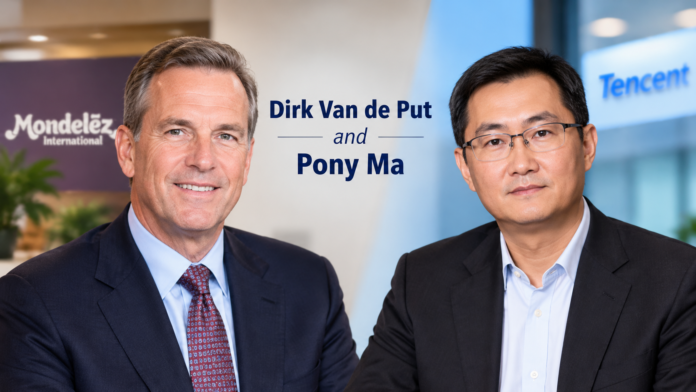
Dirk Van de Put and Pony Ma are two influential business leaders who have built their reputations in very different industries. Dirk Van de Put is known for leading Mondelēz International, the global snacking company behind popular brands such as Oreo, Cadbury, Milka, and Toblerone. Pony Ma, whose Chinese name is Ma Huateng, is the co-founder, chairman, and chief executive officer of Tencent, one of China’s most prominent technology and internet companies. Although their professional backgrounds differ, both have played important roles in managing large organizations and developing businesses for international markets.
The keyword Dirk Van de Put and Pony Ma brings together two executives whose careers offer valuable lessons about leadership, innovation, customer behavior, and business growth. Van de Put’s work focuses on consumer goods, food products, and global brand management, while Pony Ma’s leadership centers on digital technology, online communication, gaming, and internet services. Their stories demonstrate how companies in different industries can become influential by understanding what customers need and adapting to changing markets.
There is no widely established public evidence of a direct personal relationship or major joint business venture between Dirk Van de Put and Pony Ma. Their connection as a topic is primarily based on their positions as prominent business executives. Comparing their professional journeys provides a useful way to understand how leadership strategies differ between traditional consumer products and the rapidly evolving technology sector.
Who Is Dirk Van de Put?
Dirk Van de Put is a Belgian-born business executive who became chairman and chief executive officer of Mondelēz International in 2017 and 2018, respectively. His career spans several major international companies, giving him experience in food manufacturing, consumer healthcare, marketing, and business operations. Before joining Mondelēz, he served as president and chief executive officer of McCain Foods, a major producer of frozen food products.
Van de Put’s professional journey began with an educational background that was different from what many people might expect from a global food industry executive. He earned a doctorate in veterinary medicine from Ghent University in Belgium and later completed postgraduate business studies at the University of Antwerp. His career demonstrates that business leadership is not always limited to people who study management from the beginning. Technical education, practical experience, and a willingness to learn can also provide a strong foundation for executive responsibility.
Before becoming CEO of Mondelēz International, Van de Put held positions at companies including Mars, The Coca-Cola Company, Groupe Danone, Novartis, and McCain Foods. These roles helped him develop experience across different markets, product categories, and business models. His international background has been especially valuable in a company that sells snacks and confectionery products to consumers in numerous countries. His official company biography highlights his experience in both emerging and developed markets.
Dirk Van de Put’s Career at Mondelēz International
Mondelēz International is a major global snacking business with a portfolio that includes biscuits, chocolate, and other packaged snacks. Its well-known brands include Oreo, Ritz, Cadbury Dairy Milk, Milka, and Toblerone. Managing a company of this size involves more than selling popular products. Leaders must oversee manufacturing, supply chains, marketing, product development, distribution, and relationships with retailers across different countries.
Van de Put joined Mondelēz as chief executive officer in November 2017 and became chairman in April 2018. His responsibilities included guiding the company’s long-term strategy and supporting growth across established and developing markets. Because consumer preferences vary by country, the company must balance global brand consistency with local tastes, pricing expectations, and shopping habits. For example, a snack that is popular in one region may need different packaging, product sizes, or marketing in another.
Another important part of his role involves balancing business performance with responsible operations. Large food companies face challenges related to changing ingredient costs, packaging, consumer expectations, and environmental concerns. Leaders must make decisions that support profitability while maintaining product quality and strengthening relationships with customers and suppliers. Van de Put’s career at Mondelēz illustrates the complexity of leading an international consumer goods company in a competitive market.
Dirk Van de Put’s Leadership Style and Business Strategy
One of Van de Put’s professional strengths is his broad experience across several consumer-focused industries. Working with companies in food, beverages, and healthcare gave him insight into how customers choose products and how businesses develop sustainable demand. These industries have different requirements, but all depend on understanding consumers, building trust, and delivering products consistently.
His leadership responsibilities also require a global perspective. A multinational business cannot rely on a single strategy for every market because customer preferences, economic conditions, and retail systems differ from country to country. Companies must identify which parts of their operations can be standardized and which require local adjustments. This approach is particularly relevant to Mondelēz, whose brands reach consumers with different tastes, traditions, and purchasing power.
Van de Put’s career also highlights the importance of operational discipline. A strong brand may attract customers, but its long-term success depends on reliable production, effective distribution, and careful financial management. When ingredient prices rise or supply chains experience disruption, companies must find ways to protect product availability and manage costs. Effective leadership therefore involves connecting high-level strategy with the everyday decisions that keep a business running.
Who Is Pony Ma?
Pony Ma, commonly known internationally by that name, is the Chinese technology entrepreneur Ma Huateng. He co-founded Tencent in 1998 and serves as its chairman of the board and chief executive officer. Tencent developed into one of China’s leading internet and technology companies, building services that reach large audiences through communication platforms, digital entertainment, gaming, and other online products.
Unlike Van de Put, whose career developed across established consumer goods companies, Pony Ma built his reputation in the technology sector during a period of rapid internet growth. He studied computer and applied engineering at Shenzhen University. Before co-founding Tencent, he worked on research and development related to internet paging systems at China Motion Telecom Development Limited. This technical background helped prepare him for a career in software and digital services.
Tencent began as an internet company and expanded over time into a broad technology ecosystem. Its businesses include messaging and social communication, video games, digital content, advertising, financial technology, and cloud-related services. The company’s scale reflects how digital platforms can become part of people’s everyday routines, from communicating with friends to playing games and using online services. Pony Ma’s leadership has involved guiding the company’s development while responding to changing technology, competition, and user expectations.
Pony Ma’s Role in Tencent’s Growth
Tencent’s development is closely connected to the growth of internet services in China. Since its founding in 1998, the company has expanded from its early messaging services into a wide range of digital businesses. This expansion reflects a strategy built around understanding how people communicate, entertain themselves, and use technology in their daily lives.
One of Tencent’s most important services is Weixin, known internationally as WeChat. The platform combines messaging with social features and other digital services, making it much more than a traditional communication application. Its broad functionality demonstrates how technology companies can build products that encourage users to return regularly. For businesses, this creates opportunities to develop connected services and reach customers through established digital platforms.
Gaming is another major part of Tencent’s business. The company has developed and invested in gaming businesses that reach audiences across different countries. The gaming industry requires continuous innovation because players expect engaging experiences, regular updates, and new content. Tencent’s position in this market demonstrates the commercial potential of combining technology, entertainment, and a strong understanding of user preferences. Under Pony Ma’s leadership, the company has continued to operate across several interconnected areas of the digital economy.
Pony Ma’s Leadership Style and Technology Strategy
Pony Ma’s professional background in computer engineering and software development provides an important part of the context for his leadership. Technology companies must understand both the technical capabilities of their products and the practical problems those products solve for users. A service may be technically impressive, but it will struggle to grow if it does not offer clear value to customers.
Tencent’s business model illustrates the importance of building an ecosystem rather than depending on a single product. Communication platforms, gaming services, digital content, advertising, and cloud technology can support different parts of the company’s overall business. However, managing these operations requires coordination, investment, and attention to the risks associated with operating across multiple markets.
Another important challenge is maintaining user trust. Technology companies face questions involving data privacy, cybersecurity, content moderation, and responsible innovation. They must also respond to competition and changes in regulations. For Tencent, these issues are part of the broader environment in which it operates. Pony Ma’s leadership therefore involves not only developing digital products but also navigating the commercial and regulatory challenges associated with a large technology business.
Dirk Van de Put and Pony Ma: Key Differences
Although Dirk Van de Put and Pony Ma are both prominent executives, their industries require different approaches to business management. Van de Put leads a company whose products are physical consumer goods. Its operations depend on ingredients, manufacturing facilities, packaging, transportation, retailers, and consumer demand. Success requires maintaining quality while making products available at competitive prices.
Pony Ma operates in a technology environment where digital products can reach large audiences without the same physical distribution requirements as packaged food. Tencent still requires significant infrastructure and investment, but its products can be updated, expanded, and distributed digitally. Technology companies must also respond quickly to new competitors, changing user behavior, and developments in software and artificial intelligence.
Their business models also differ in how they build customer relationships. Mondelēz relies heavily on recognizable brands, product quality, retail availability, and repeat purchases. Tencent’s services can develop long-term engagement through communication, entertainment, and connected digital experiences. Despite these differences, both companies depend on understanding customer behavior and creating reasons for people to continue using their products.
Similarities Between Dirk Van de Put and Pony Ma
One important similarity between the two executives is their responsibility for organizations operating on an international scale. Mondelēz sells consumer products across numerous markets, while Tencent has developed technology businesses and investments with international reach. Both companies must understand local conditions while maintaining a clear overall business strategy.
Innovation is another shared priority. For Mondelēz, innovation may involve new flavors, packaging formats, product development, and more effective manufacturing processes. For Tencent, it may involve software features, digital entertainment, gaming experiences, and improvements to online services. The specific activities differ, but both organizations need to respond to customer expectations rather than relying entirely on past success.
Both careers also demonstrate the importance of long-term planning. A successful business must generate results today while preparing for future challenges. Consumer goods companies need to anticipate changes in costs, shopping habits, and product preferences. Technology companies must prepare for emerging competitors, new platforms, and rapidly changing digital behavior. The ability to balance current performance with future investment is an important responsibility for leaders in both sectors.
What Entrepreneurs Can Learn From Dirk Van de Put and Pony Ma
Entrepreneurs can learn several practical lessons by examining the careers of Van de Put and Pony Ma. The first is the importance of understanding the customer. Businesses are more likely to develop lasting demand when they understand what people need, how they make purchasing decisions, and why they choose one product over another. Customer research should guide business decisions rather than simply confirm existing assumptions.
A second lesson is the value of building a recognizable and reliable business. Mondelēz benefits from brands that consumers already know, while Tencent has developed digital services that users incorporate into their routines. Smaller businesses can apply this principle by offering consistent quality, communicating clearly, and giving customers a dependable experience. Building trust takes time, but it can become an important advantage over competitors.
The third lesson is to remain open to change. Markets rarely stay the same for long. New technologies, economic conditions, customer expectations, and competitors can all affect a company’s performance. Entrepreneurs should regularly review their products, identify weaknesses, and look for realistic opportunities to improve. At the same time, they should avoid making changes simply because a new trend is popular. Effective adaptation requires evidence, planning, and a clear understanding of the business’s goals.
The Global Business Influence of Dirk Van de Put and Pony Ma
Dirk Van de Put’s influence comes from his leadership in the international consumer goods industry. Products associated with Mondelēz are familiar to many shoppers, and the company operates within a market shaped by brand loyalty, retail relationships, and changing consumer preferences. His career demonstrates the importance of managing established brands while adapting to changing business conditions.
Pony Ma’s influence comes from his role in building Tencent into a major technology company. Digital communication and entertainment have become important parts of modern life, and Tencent operates in several areas connected to these changes. The company’s development illustrates how internet businesses can grow by creating services that meet multiple user needs.
Their careers also reflect two different forms of economic influence. Consumer goods businesses connect manufacturing, agriculture, packaging, transportation, retail, and marketing. Technology companies connect software development, digital infrastructure, content creation, advertising, and online services. Both industries support extensive networks of workers and businesses, even though their products reach customers in different ways.
Frequently Asked Questions About Dirk Van de Put and Pony Ma
1. Who is Dirk Van de Put?
Dirk Van de Put is a Belgian-born business executive who became chairman and CEO of Mondelēz International. He joined the company as CEO in November 2017 and became chairman in April 2018. Before joining Mondelēz, he held leadership positions at McCain Foods, Novartis, Groupe Danone, Coca-Cola, and Mars.
2. Who is Pony Ma?
Pony Ma is the professional name of Ma Huateng, a Chinese technology entrepreneur. He co-founded Tencent in 1998 and serves as its chairman and CEO. Tencent is known for businesses involving digital communication, gaming, online content, and other technology services.
3. Are Dirk Van de Put and Pony Ma business partners?
There is no widely documented evidence of a major direct business partnership between Dirk Van de Put and Pony Ma. They lead businesses in different industries, with Van de Put associated with consumer snacks and Pony Ma associated with internet technology and digital services.
4. What is the main difference between Dirk Van de Put and Pony Ma?
The main difference is their business focus. Van de Put leads a global snacking company that manufactures and sells physical products, while Pony Ma leads a technology company focused on digital platforms, gaming, communication, and internet services. Their industries require different operating models and investment priorities.
5. What can business owners learn from their careers?
Business owners can learn the importance of customer understanding, innovation, strong brands, and long-term planning. Their careers also demonstrate why leaders need to adapt to changing markets while maintaining reliable products and services. These principles can apply to businesses of different sizes and across many industries.
Conclusion
Dirk Van de Put and Pony Ma have built influential careers through leadership in two very different sectors of the global economy. Van de Put is known for leading Mondelēz International and overseeing a portfolio of internationally recognized snack brands. Pony Ma is known for co-founding Tencent and guiding its development across communication, gaming, and digital technology.
Their professional journeys demonstrate that successful leadership can take many forms. Consumer goods companies depend on reliable manufacturing, recognizable brands, and effective distribution, while technology companies must continually improve their digital services and respond to changing user behavior. Both types of organizations need clear strategies, customer-focused decisions, and the ability to adapt.
For readers researching Dirk Van de Put and Pony Ma, the most useful takeaway is that their careers provide different but complementary lessons about modern business. Although there is no established major partnership between them, comparing their achievements helps explain how leaders build large organizations, respond to competition, and create value in an increasingly connected global economy.
You May Also Read: Richard Peery and John Paulson