
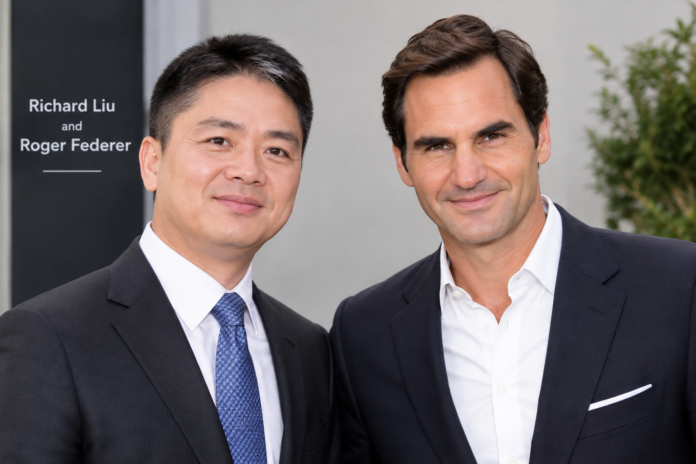

Richard Liu and Roger Federer are two internationally recognised figures who have achieved remarkable success in very different fields. Richard Liu is a Chinese entrepreneur best known for founding JD.com, one of China’s major e-commerce companies, while Roger Federer is a Swiss tennis legend celebrated for his extraordinary achievements on the court. Although their professional journeys differ, both men have built influential careers through ambition, discipline, and a long-term commitment to excellence.
Interest in Richard Liu and Roger Federer often centres on their wealth, personal achievements, business ventures, and influence beyond their main professions. Liu transformed an entrepreneurial idea into a major technology and retail business, while Federer turned his tennis talent into a global sporting legacy supported by commercial partnerships and philanthropic work.
Their stories also offer valuable lessons about leadership, reputation, and the different ways people can achieve financial success. One built his influence through technology, logistics, and online commerce; the other combined athletic performance with a powerful international brand. Understanding their backgrounds helps explain why both names continue to attract attention from readers interested in successful public figures.
Who Is Richard Liu?
Richard Liu, whose full name is Liu Qiangdong, is a Chinese entrepreneur and the founder of JD.com. He established the company in 2004 and helped transform it from a relatively small retail operation into a major e-commerce and technology business. The company is known for its online marketplace, logistics network, and investment in technology designed to improve shopping and delivery services.
Liu’s business journey is closely connected to the development of online retail in China. As internet access expanded and consumers increasingly embraced digital shopping, JD.com developed a business model focused on product quality, reliable delivery, and operational control. These priorities helped the company distinguish itself in a competitive market.
Today, Liu remains an important figure in the company’s leadership. According to JD.com’s official investor relations profile, he served as chief executive officer until April 2022 and continues as chairman. His role has evolved from managing daily operations to helping guide the company’s longer-term direction.
Richard Liu’s Early Life and Education
Richard Liu was born in China and grew up before the country’s modern e-commerce industry became the enormous market it is today. His early experiences preceded the widespread use of smartphones, digital payments, and online shopping platforms. The business environment he later entered was therefore very different from the one familiar to consumers today.
Liu studied sociology at Renmin University of China, graduating in 1996. His educational background was not directly focused on building an online retail empire, but understanding people, communities, and social behaviour can be valuable in business. Successful companies must recognise what customers need and develop services that respond to those expectations.
He later completed an Executive Master of Business Administration at China Europe International Business School in 2011. His combination of academic experience and practical entrepreneurship helped shape his approach to business development. His career demonstrates that business success does not necessarily require a narrowly defined educational path, although learning, adaptability, and commercial experience can all play important roles.
How Richard Liu Built JD.com
Richard Liu began his entrepreneurial journey in traditional retail before establishing JD.com in 2004. The company developed as online shopping became increasingly popular in China. Liu recognised that digital commerce could offer customers greater convenience, but he also understood that trust and delivery reliability would be important to long-term success.
One distinctive feature of JD.com’s business model has been its investment in logistics and distribution infrastructure. Rather than relying entirely on outside delivery providers, the company developed extensive capabilities to manage the movement of products from warehouses to customers. This approach helped it build a reputation for dependable service while creating a substantial operational network.
Over time, JD.com expanded beyond its original retail activities into technology, logistics, healthcare-related services, and other areas. The company became a significant participant in China’s digital economy, serving consumers and businesses through a broad range of services. Its growth illustrates how an initial business idea can develop into a much larger organisation when supported by investment, innovation, and effective execution.
Richard Liu Net Worth and Sources of Wealth
Richard Liu’s wealth is closely associated with his position as the founder of JD.com and his financial interests connected to the business. As the company grew, its commercial value and his ownership-related interests became important factors in estimates of his personal fortune.
However, it is important to distinguish between a company’s total market value and its founder’s personal net worth. JD.com is a publicly traded company, but Liu’s wealth depends on factors such as his shareholdings, other assets, liabilities, and changes in market prices. A company’s market capitalisation does not represent the amount of money its founder personally owns.
For this reason, estimates of Richard Liu’s net worth can vary between financial publications and may change as market conditions shift. His exact current financial position should not be treated as confirmed unless supported by reliable, up-to-date financial disclosures. His career nevertheless demonstrates how founding and developing a large business can create substantial long-term financial opportunities.
Richard Liu’s Leadership Style and Business Influence
Richard Liu’s leadership has been associated with a focus on operational efficiency, customer experience, and the development of JD.com’s logistics capabilities. In online retail, attracting customers is only one part of the challenge. Businesses must also maintain inventory, coordinate deliveries, manage suppliers, and handle customer concerns effectively.
JD.com’s investment in infrastructure reflects the importance Liu placed on these practical elements of commerce. A convenient website may encourage a customer to place an order, but reliable delivery and consistent service are often what persuade that customer to return. Building these systems requires capital, planning, and the ability to manage complex operations.
Liu’s experience also highlights the importance of adapting leadership responsibilities as a company matures. Founders often begin by making many daily decisions themselves, but larger organisations require broader management structures and specialised teams. As JD.com developed, Liu’s position shifted toward chairman-level responsibilities, allowing the company to operate under a different executive leadership arrangement.
Who Is Roger Federer?
Roger Federer is a Swiss former professional tennis player widely regarded as one of the greatest athletes in the history of the sport. Born on August 8, 1981, in Basel, Switzerland, he developed an elegant playing style that combined precise serving, exceptional movement, tactical intelligence, and remarkable control.
Federer began playing tennis at a young age and turned professional in 1998. His rise through the professional rankings eventually led to an extraordinary career filled with major championships and historic achievements. He became particularly famous for his success at Wimbledon, where his performances on grass courts helped establish his reputation as one of tennis’s most accomplished champions.
He retired from professional tennis in 2022 after a career spanning more than two decades. According to his official website, Federer finished with 20 Grand Slam singles titles and 103 singles titles overall. His influence, however, extends beyond those statistics. He became a global sporting icon whose name is associated with excellence, professionalism, and the international popularity of tennis.
Roger Federer’s Greatest Career Achievements
Federer’s professional achievements place him among the most successful players in men’s tennis history. He won 20 Grand Slam singles titles, including eight Wimbledon championships, six Australian Open titles, five US Open titles, and one French Open title. These victories demonstrated his ability to perform at the highest level across different surfaces and competitive conditions.
Another significant milestone was his time at the top of the world rankings. Federer spent 310 weeks as the world’s No. 1-ranked men’s singles player, including a record 237 consecutive weeks during his dominant period in the mid-2000s. Maintaining that position required consistent performances against the strongest players in the world over an extended period.
Federer also won an Olympic gold medal in men’s doubles with fellow Swiss player Stan Wawrinka at the 2008 Beijing Olympics. In addition, he helped Switzerland win the Davis Cup in 2014. These achievements demonstrate that his legacy was not limited to individual Grand Slam victories; he also contributed to Swiss tennis on the international stage.
Roger Federer’s Net Worth and Income Sources
Roger Federer’s wealth comes from a combination of professional tennis earnings, commercial partnerships, business interests, and other investments. Unlike athletes whose financial success depends heavily on salaries from a team, Federer developed a broad commercial profile that continued to create opportunities beyond tournament competition.
During his playing career, Federer earned substantial prize money from international tournaments. The ATP Tour records more than $130 million in career prize money for him, reflecting years of success at the highest level. However, prize money represents only one part of an athlete’s financial picture and does not account for all the commercial opportunities that can follow sporting success.
Federer’s endorsement portfolio has also played an important role in his financial profile. His long-standing relationship with Rolex and other major brands has connected his name with premium products and international marketing campaigns. Such partnerships can be particularly valuable for athletes who maintain strong public recognition and a reputation that appeals to audiences beyond their sport.
His exact current net worth is not publicly established through a comprehensive personal financial statement. Online estimates should therefore be treated as approximations. Nevertheless, his substantial career earnings and long-term commercial partnerships help explain why he is regularly discussed among the wealthiest former tennis players.
Roger Federer’s Business Ventures and Endorsements
Federer’s commercial success reflects his ability to build a brand that extends beyond tennis. His public image has often emphasised professionalism, style, and consistency, qualities that have made him an attractive partner for international businesses. His relationships with well-known brands have remained an important part of his public identity.
He has also been associated with business ventures in the sports and lifestyle sectors. These activities demonstrate how a successful athlete can use the visibility gained through competition to pursue opportunities in other industries. However, individual investments may carry different levels of risk, and their financial results should not be assumed without reliable information.
Federer’s commercial strategy also illustrates the value of maintaining a recognisable identity over time. Although he no longer competes professionally, his achievements remain relevant to tennis fans and commercial partners. This continuing recognition can support appearances, collaborations, and other projects that do not depend on his participation in tournaments.
Richard Liu and Roger Federer: A Comparison of Their Success
Richard Liu and Roger Federer built their reputations through very different kinds of achievement. Liu’s career centres on entrepreneurship, digital commerce, logistics, and business leadership. Federer became famous through elite athletic performance, international competition, and his influence on the popularity of tennis.
Their paths nevertheless share several themes. Both developed expertise over many years, worked in highly competitive environments, and established reputations that extended beyond their immediate professional responsibilities. Liu had to compete with other retailers and technology companies, while Federer faced generations of outstanding tennis players during his career.
Their approaches to wealth also differ. Liu’s financial position is closely linked to his business ownership and the performance of companies connected to his entrepreneurial activities. Federer’s wealth has been shaped by tournament earnings, endorsements, and commercial opportunities built around his sporting reputation. Their stories show that financial success can emerge from different industries when talent, timing, execution, and long-term planning come together.
Philanthropy and Contributions Beyond Their Professions
Richard Liu’s public role has included an interest in rural development in China. JD.com has participated in initiatives connected to rural commerce, agricultural distribution, and efforts to improve access to markets. Such activities can help connect producers with consumers while creating new commercial opportunities in underserved areas.
Federer has established a particularly visible philanthropic presence through the Roger Federer Foundation. The foundation focuses on supporting early childhood education and improving educational opportunities for children, especially in southern Africa and Switzerland. Its work reflects Federer’s stated interest in helping children gain access to the learning opportunities that can shape their future lives.
These contributions demonstrate how prominent individuals can use their resources and influence beyond their primary professions. Business leaders may support development through employment, infrastructure, and community programmes, while athletes may use their public platforms to raise awareness and support charitable projects. The scale and effectiveness of any particular initiative should be assessed through its documented work and results.
Lessons to Learn From Richard Liu and Roger Federer
One important lesson from Richard Liu’s career is the value of understanding what customers actually need. Building a successful business requires more than an attractive idea. Companies must create systems that deliver reliable products or services, earn trust, and respond to changing market conditions.
Federer’s career offers a different lesson: long-term excellence depends on consistent effort and the ability to adapt. His achievements were not the result of a single championship. They emerged from years of training, tactical development, competition, and adjustments to the demands of professional tennis.
Both stories also highlight the importance of building a reputation. Liu’s business achievements depend on the performance and credibility of the organisations he helped establish, while Federer’s reputation grew through his conduct and results on the court. In both cases, lasting influence requires more than initial success; it depends on how that success is maintained and developed over time.
Frequently Asked Questions About Richard Liu and Roger Federer
1. Who is Richard Liu?
Richard Liu, also known as Liu Qiangdong, is a Chinese entrepreneur who founded JD.com in 2004. He remains the company’s chairman and is known for helping develop its e-commerce and logistics operations.
2. What is Roger Federer famous for?
Roger Federer is famous for his tennis career, during which he won 20 Grand Slam singles titles and 103 singles titles overall. He retired from professional tennis in 2022.
3. Who is wealthier, Richard Liu or Roger Federer?
A precise comparison requires current, reliable estimates of both individuals’ personal wealth. Liu’s fortune is closely connected to business ownership, while Federer’s wealth reflects tennis earnings, endorsements, and other commercial interests. Because estimates vary and personal financial details are not fully public, a definitive comparison should be approached cautiously.
4. How did Richard Liu make his money?
Liu built much of his wealth through founding and developing JD.com. The company’s expansion into e-commerce, logistics, technology, and related services helped establish its position in China’s digital economy.
5. How did Roger Federer earn money outside tennis?
Federer developed commercial partnerships with major brands and pursued business opportunities beyond professional competition. His international recognition and long-lasting sporting reputation have helped create opportunities outside tournament prize money.
Conclusion
Richard Liu and Roger Federer represent two distinct forms of modern success. Liu helped build a major e-commerce company by focusing on technology, logistics, customer service, and business development. Federer achieved sporting greatness through exceptional tennis ability, consistent performances, and a professional reputation that extended far beyond the court.
Their financial journeys are equally different. Liu’s wealth is connected to entrepreneurship and business ownership, while Federer’s financial success combines sporting earnings with endorsements and other commercial activities. Neither person’s precise current net worth should be treated as certain without reliable financial evidence.
Ultimately, the stories of Richard Liu and Roger Federer offer a useful reminder that success can take many forms. Whether through building a business or mastering a sport, lasting achievement usually requires discipline, adaptability, and the ability to create value over time.
You May Also Read; Post Malone and Kumar Birla