
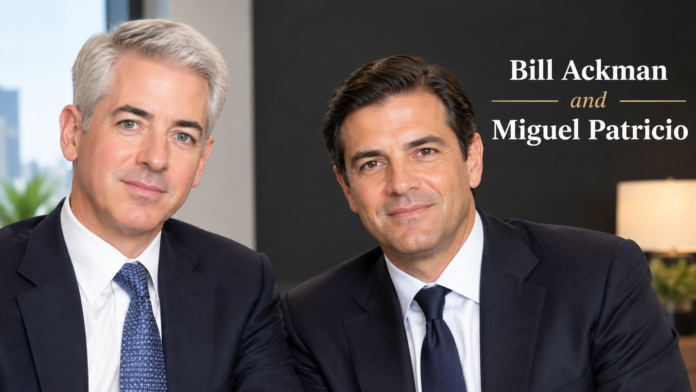

Bill Ackman and Miguel Patricio are two well-known figures in the international business world, but they built their reputations through different professional paths. Ackman is an American billionaire investor recognized for his work in hedge funds, corporate strategy, and shareholder activism. Patricio is a Portuguese business executive known for his experience in global marketing, consumer brands, and corporate leadership, particularly at Anheuser-Busch InBev and Kraft Heinz.
Interest in Bill Ackman and Miguel Patricio often comes from curiosity about their professional backgrounds, business achievements, leadership styles, and possible connections. Both have worked around major corporations and decisions that influence investors, consumers, and the wider business community. However, their careers should be understood separately rather than assuming that they have a direct partnership.
Their professional histories offer an interesting comparison between two ways of creating business value. Ackman focuses primarily on investing in companies and identifying opportunities to improve their performance, while Patricio built his reputation by developing brands, understanding consumers, and leading large organizations. Exploring their backgrounds helps explain how financial strategy and operational leadership can influence the success of major businesses.
Who Is Bill Ackman?
Bill Ackman, whose full name is William Albert Ackman, is an American investor and the founder and chief executive officer of Pershing Square Capital Management. Born on May 11, 1966, he developed an interest in business and investing early in his life. Over the years, he has become one of the most recognizable figures in the hedge fund industry because of his concentrated investment strategy and willingness to take public positions on corporate decisions.
Ackman studied at Harvard College, where he earned an undergraduate degree in social studies. He later completed an MBA at Harvard Business School. His education provided a foundation in business analysis, financial decision-making, and management, although his reputation was ultimately shaped by his work in the investment industry.
Before establishing Pershing Square, Ackman co-founded Gotham Partners, an investment firm that helped him gain experience analyzing businesses and managing capital. He founded Pershing Square Capital Management in 2003, building an investment company known for taking substantial positions in selected publicly traded businesses. His approach often involves researching a company’s financial performance, competitive position, leadership, and opportunities for long-term growth.
Bill Ackman’s Investment Strategy
Ackman’s investment approach is often associated with activist investing. This strategy involves acquiring a significant ownership position in a company and then encouraging changes that the investor believes could improve its performance or increase shareholder value. Such changes might involve business operations, capital allocation, corporate governance, or management strategy.
Unlike investors who spread their money across hundreds of companies, Ackman has frequently favored a concentrated portfolio of businesses that he believes have attractive long-term prospects. This approach allows him to devote considerable attention to individual investments. However, concentrated investing can also increase risk because a disappointing result at one company may have a substantial effect on a fund’s overall performance.
His career has included investments in businesses across several industries, including restaurants, transportation, financial services, and consumer products. Companies associated with his investment activities have attracted attention from financial analysts and the media, particularly when his recommendations have challenged existing management decisions.
Ackman’s methods have generated both support and criticism. Supporters argue that active investors can encourage companies to address inefficiencies and improve accountability. Critics, meanwhile, sometimes question whether activist campaigns place too much emphasis on short-term shareholder returns. These differing opinions have made Ackman an influential and frequently discussed figure in modern finance.
Bill Ackman’s Business Influence and Public Profile
One reason Ackman remains prominent is his willingness to discuss investments publicly. He has presented detailed arguments about companies, explained his investment positions, and used social media to communicate with investors and the public. This visibility has helped make his views part of wider conversations about markets and corporate governance.
His career has also demonstrated that successful investing requires more than identifying an attractive company. Investors must evaluate risks, understand business models, assess leadership, and make decisions under uncertain conditions. Even experienced investors can encounter losses when markets move unexpectedly or an investment thesis fails to develop as anticipated.
In addition to managing investments, Ackman has participated in philanthropic activities through the Pershing Square Foundation, which supports initiatives in areas including education, health, and economic development. These activities represent another dimension of his professional life beyond financial markets.
Ackman’s influence therefore extends across investing, corporate strategy, public debate, and philanthropy. His career provides an example of how investors can influence businesses without necessarily managing their daily operations.
Who Is Miguel Patricio?
Miguel Patricio is a Portuguese business executive best known for his leadership experience in the global consumer goods and beverage industries. His career has focused on marketing, brand development, business strategy, and executive management. Unlike Ackman, whose primary professional identity is connected to investment management, Patricio built his reputation within companies that manufacture and sell products to consumers worldwide.
Patricio developed extensive experience in international business through positions at major companies, including Johnson & Johnson, Coca-Cola, and Philip Morris. These roles exposed him to different markets, consumer preferences, and approaches to brand management. Working across several organizations helped him develop an understanding of how businesses compete in crowded markets.
A major stage of his career came at Anheuser-Busch InBev, one of the world’s largest brewing companies. He held senior positions within the organization and became its global chief marketing officer. In this role, his responsibilities involved marketing strategy, brand positioning, and helping the company maintain the strength of its products across international markets.
Patricio’s experience in marketing eventually led him into top executive leadership. In 2019, Kraft Heinz announced that he would become its chief executive officer. His appointment brought an executive with significant international marketing experience into a company facing important strategic and operational challenges.
Miguel Patricio’s Leadership at Kraft Heinz
Kraft Heinz is a major food company associated with familiar brands such as Heinz, Kraft, Philadelphia, and Oscar Mayer. Its products are sold across numerous markets, making brand recognition, pricing, distribution, and consumer trust important parts of its business strategy.
Patricio became CEO in July 2019, when the company was working to address financial pressures and improve its long-term business performance. Kraft Heinz faced questions about its growth strategy, brand investment, and ability to respond to changing consumer expectations. His appointment signaled an interest in using his marketing background to help strengthen the company’s position.
As CEO, Patricio was responsible for overseeing the company’s overall direction, working with its leadership team, and balancing operational priorities with longer-term strategic goals. Leading a large consumer goods company requires coordination across manufacturing, distribution, product development, marketing, and financial management.
His tenure also illustrated the difficulties of managing established brands in a competitive market. Familiar products may benefit from decades of recognition, but that does not guarantee continued growth. Companies must still respond to changing shopping habits, price sensitivity, competition, and consumer interest in new products.
Miguel Patricio’s Experience in Global Marketing
Marketing has been one of the defining elements of Patricio’s career. Effective marketing involves more than advertising a product. It requires understanding customer behavior, developing a recognizable brand identity, selecting suitable distribution channels, and communicating a clear value proposition.
His experience at Anheuser-Busch InBev provided opportunities to work with major international beverage brands. Managing brands across different countries can be complicated because consumers do not always respond to the same messages, products, or pricing strategies. Successful marketing requires a balance between global consistency and local relevance.
Patricio’s background in consumer-focused businesses also distinguishes his professional approach from that of an investment manager. While an investor may analyze a company’s market position and encourage strategic changes, an executive must help implement those changes through employees, budgets, product decisions, and operational processes.
This experience makes Patricio an interesting example of how marketing expertise can support broader corporate leadership. His career demonstrates that understanding customers and building strong brands can be important qualifications for leading a large business.
What Is the Connection Between Bill Ackman and Miguel Patricio?
The connection between Bill Ackman and Miguel Patricio is primarily a matter of business context and comparison. Both have been associated with major corporations and decisions involving corporate performance, although their professional roles have been different.
Ackman has been involved with Kraft Foods through his investment firm. In January 2010, Reuters reported that Pershing Square had accumulated a stake of approximately 2% in Kraft Foods during the company’s pursuit of British confectionery company Cadbury. This activity occurred years before Patricio became Kraft Heinz’s CEO in 2019.
Patricio’s connection to the Kraft name came through executive leadership at Kraft Heinz, the company formed through the 2015 merger of Kraft Foods Group and H.J. Heinz. His responsibilities involved running the business rather than investing in it as an activist shareholder.
The distinction matters because the two men did not hold the same role at the same time in the company’s history. Ackman’s documented involvement was connected to an investment position in Kraft Foods in 2010, while Patricio’s leadership of Kraft Heinz began nearly a decade later.
There is no well-established public evidence that Ackman and Patricio formed a direct business partnership or worked together in a sustained executive relationship. Their names are relevant to discussions of corporate strategy because their careers illustrate different ways people can influence major companies.
Bill Ackman vs. Miguel Patricio: Key Differences
Although both men have held influential positions in the business world, their professional responsibilities differ considerably. Comparing them helps clarify the distinction between investing in companies and managing them.
| Category | Bill Ackman | Miguel Patricio |
| Nationality | American | Portuguese |
| Main professional field | Investment management | Corporate leadership and marketing |
| Best known for | Founding Pershing Square Capital Management | Leadership at AB InBev and Kraft Heinz |
| Core expertise | Financial analysis and investment strategy | Brand development and business management |
| Professional approach | Invests in businesses and evaluates opportunities to improve shareholder value | Leads organizations, develops strategy, and oversees business operations |
| Kraft-related connection | Pershing Square’s investment in Kraft Foods in 2010 | CEO of Kraft Heinz from 2019 through 2023 |
| Industry focus | Multiple industries through investments | Consumer goods, food, and beverages |
| Public influence | Financial markets and corporate governance | Brand strategy and executive management |
The table highlights how their different backgrounds shape their influence. Ackman evaluates companies from an investment perspective, looking at their financial performance, competitive advantages, and potential for long-term value creation. His work may involve encouraging corporate changes, but he is not automatically responsible for managing a company’s daily operations.
Patricio’s work has involved direct responsibility for business leadership. Executives must oversee teams, allocate resources, establish priorities, and help organizations respond to competitive pressures. Their performance is judged not only by financial results but also by their ability to execute strategy and maintain a functioning organization.
Neither approach guarantees success. Investment managers must deal with market uncertainty and the risk of incorrect assumptions, while corporate executives must navigate operational challenges and changing customer expectations. Their careers illustrate different but important dimensions of the modern business environment.
How Their Leadership Styles Compare
Bill Ackman’s leadership style is closely connected to research, financial analysis, and concentrated decision-making. He often develops detailed views about businesses and communicates why he believes a particular investment is attractive. When he adopts an activist position, he may argue that changes to corporate strategy or governance could improve the company’s future performance.
This approach can place pressure on business leaders to explain their decisions and demonstrate how they intend to create value. However, activist investing can also produce disagreements between shareholders and company management, especially when they have different views about the best way forward.
Miguel Patricio’s leadership background is more closely associated with marketing, operations, and organizational management. Executives at large consumer goods companies must work with teams across many functions, ensuring that products remain competitive while the business meets its financial and operational objectives.
His professional experience shows the importance of understanding consumers and maintaining relevant brands. A company can have strong historical recognition but still lose customers if its products, prices, or marketing fail to match current expectations.
The broader lesson is that successful business leadership requires different skills depending on the role. Investors need to assess opportunities and risks, while executives must translate strategy into practical decisions. Both disciplines require judgment, patience, communication, and the ability to adapt when circumstances change.
The Importance of Corporate Strategy in Their Careers
Corporate strategy plays a major role in both investment management and executive leadership. It helps determine how a company competes, allocates resources, develops products, and responds to changes in its industry.
For Ackman, corporate strategy is often part of the investment decision. Before committing capital, an investor may examine whether a company has a durable competitive advantage, whether its leadership is allocating resources effectively, and whether changes could improve its long-term prospects.
For Patricio, strategy has involved the challenges of leading consumer-facing businesses. Companies such as Kraft Heinz must make decisions about product portfolios, marketing budgets, pricing, manufacturing, and distribution. These choices influence whether brands remain competitive and whether the business can grow sustainably.
Their careers show that strategy must be supported by execution. An attractive investment idea may not produce the expected outcome, and a promising corporate plan may fail if the organization cannot implement it effectively.
Ultimately, businesses need a combination of financial discipline, strong management, customer awareness, and realistic planning. Examining Ackman and Patricio side by side offers a useful way to understand how these elements interact in large organizations.
Frequently Asked Questions About Bill Ackman and Miguel Patricio
1. Are Bill Ackman and Miguel Patricio business partners?
There is no well-established public evidence that Bill Ackman and Miguel Patricio are direct business partners. Their names are connected through the broader business world and their separate associations with major corporations. Ackman is primarily an investor, while Patricio is known for executive leadership and marketing.
2. What is Bill Ackman famous for?
Bill Ackman is best known as the founder and CEO of Pershing Square Capital Management. He has gained recognition for activist investing, concentrated investment positions, and public arguments about corporate strategy and shareholder value.
3. What is Miguel Patricio famous for?
Miguel Patricio is best known for his career in international marketing and corporate leadership. He served as global chief marketing officer at Anheuser-Busch InBev and later became CEO of Kraft Heinz in 2019.
4. Did Bill Ackman invest in Kraft Foods?
Yes. Reuters reported in January 2010 that Ackman’s investment firm, Pershing Square, had accumulated an approximately 2% stake in Kraft Foods during the company’s pursuit of Cadbury. This investment activity preceded Patricio’s tenure as Kraft Heinz CEO by several years.
5. What is the main difference between Bill Ackman and Miguel Patricio?
The main difference is their professional focus. Ackman works primarily in investment management, evaluating companies and making investment decisions. Patricio built his career through marketing and executive management, overseeing business strategy and operations at major consumer goods companies.
6. What can business professionals learn from their careers?
Their careers highlight the value of understanding financial performance, building strong brands, and making decisions based on evidence. Ackman’s work demonstrates the importance of investment analysis and corporate accountability, while Patricio’s experience emphasizes consumer understanding, organizational leadership, and strategic execution.
Final Thoughts on Bill Ackman and Miguel Patricio
Bill Ackman and Miguel Patricio represent two distinct approaches to influence and leadership in the international business world. Ackman has built his reputation through investment management, financial analysis, and shareholder activism. Patricio has developed his career through global marketing, consumer brand management, and executive leadership.
Their connection is best understood through their separate professional histories rather than an assumed personal partnership. Ackman’s investment firm’s involvement with Kraft Foods occurred in 2010, while Patricio became CEO of Kraft Heinz in 2019. These events belong to different periods and reflect different responsibilities.
For readers interested in business, finance, and corporate leadership, their careers provide useful lessons. Investors must understand a company’s financial position and potential, while executives must build effective teams, respond to customers, and turn strategic plans into results.
Although their methods differ, both careers highlight the importance of informed decision-making, long-term thinking, and adapting to changing business conditions. Understanding those differences provides a clearer picture of how investment strategy and executive leadership can shape major companies.
You May Also Read: Dirk Van de Put and Barack Obama